Повний посібник: Compostable vs Plastic Cups ̵
Компостування проти пластикових стаканчиків – Зробити стійкий вибір
На сучасному екологічно свідомому ринку, вибір міжстаканчики для компостуванняітрадиційні пластикові стакани являє собою більше, ніж просто упаковку, це твердження про цінності бренду, екологічна відповідальність, і довгострокову стійкість. Пластикові відходи забруднюють океани та переповнені звалища, Компанії в усьому світі стикаються з дедалі більшим тиском, щоб зробити вибір більш розумного пакування. У цьому посібнику розглядаються критичні відмінності між цими параметрами, надання інформації на основі даних для прийняття ділових рішень.
частина 1: Склад матеріалу & Витоки
1.1 Компостні чашки: Інновації, засновані на природі
Компостовані стаканчики в основному використовують матеріали, які розкладаються на нетоксичні компоненти протягом певного часу за відповідних умов.
Основні матеріали:
- PLA (Полілацинова кислота):Отримують із ферментованого рослинного крохмалю (кукурудза, цукрова тростина, маніока). Такі компанії, якShenzhen Yasitai Packaging Products Co., ТОВ, з їх24+ роківдосвід роботи в галузі, спеціалізуються на виробництві цих передових чашки для компостування PLA.
- PHA (Полігідроксіалканоати):Виробляється мікроорганізмами, що споживають рослинні цукру
- Папір із компостованими вкладишами: Використання покриттів на рослинній основі замість пластикових ламінатів
Ключові стандарти сертифікації:
- ASTM D6400: Стандарт США для промислового компостування
- IN 13432:Вимагання європейського стандарту 90% поломка всередині 90 днів
- Сертифікація BPI:Перевірка третьою стороною в Північній Америці
1.2 Традиційні пластикові стакани: Технологія, що залежить від нафти
Звичайні пластикові стакани покладаються на обмежені ресурси викопного палива.
Основні матеріали:
- ПЕТ (Поліетилентерефталат):ясно, міцний пластик для холодних напоїв
- пп (Поліпропілен):Гнучкий, термостійкий пластик для гарячих напоїв
- PS (полістирол):Легкі пінопластові чашки (заборонено в багатьох регіонах)
Виробничий слід:
Виробництво традиційної пластмаси становить приблизно 6% світового споживання нафти та 1.5% викидів парникових газів.
частина 2: Порівняння впливу на навколишнє середовище
2.1 Розбивка аналізу життєвого циклу
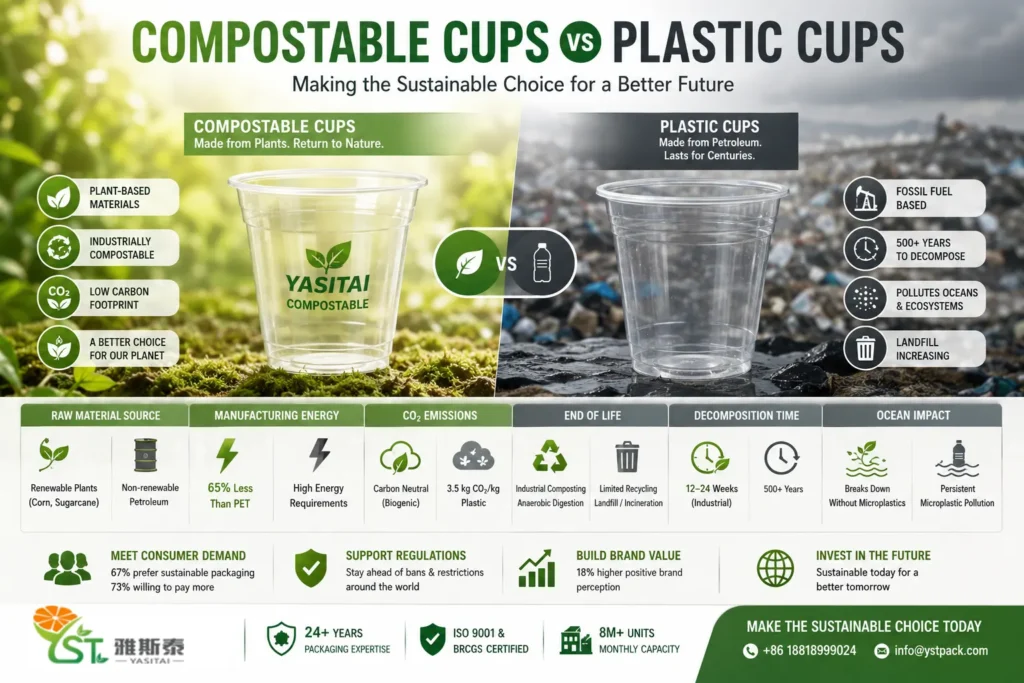
| Категорія впливу | Компостні чашки | ПЕТ пластикові стаканчики | ПП пластикові стаканчики |
|---|---|---|---|
| Джерело сировини | Відновлювані рослини | Невідновлювана нафта | Невідновлювана нафта |
| Енергія виробництва | 65% менше, ніж ПЕТ | Високі вимоги до енергії | Високі вимоги до енергії |
| Викиди CO₂ | Вуглецевий нейтральний (біогенні) | 3.5 кг CO₂/кг пластику | 3.2 кг CO₂/кг пластику |
| Варіанти завершення життя | Промислове компостування, анаеробне зброджування | Обмежена переробка, звалище, спалювання | Обмежена переробка, звалище, спалювання |
| Час розкладання | 12-24 тижнів (промислові) | 500+ років | 500+ років |
| Вплив океану | Розкладається без мікропластику | Стійке забруднення мікропластиком | Стійке забруднення мікропластиком |
2.2 Реалії управління відходами
Системні вимоги компостування:
- Промислові об'єкти:Необхідний для правильної поломки (90+ днів, 60°C)
- Споживча освіта:Необхідний для правильного сортування відходів
- Інфраструктура збору: Розвивається, але не завершено в багатьох регіонах
Обмеження щодо переробки пластику:
- Єдиний 9% пластикових відходів у всьому світі переробляється
- Проблеми забрудненнязменшити придатність для переробки ПЕТ-чашок
- Залишки їжі часто робить чашки непридатними для переробки
частина 3: Продуктивність & Аналіз програми
3.1 Порівняння функціональних характеристик
Термостійкість:
- Компостовані PLA чашки:Оптимальна 0-50°C (ідеально підходить для холодних напоїв)
- Чашки для домашніх тварин:Чудово підходить для холодних напоїв (-40 до 70°C)
- П.п. чашки:Підходить для гарячих напоїв (до 135°C)
Структурна цілісність:
- Компостні чашки преміум-класу від досвідчених виробників тепер відповідають прозорості та жорсткості ПЕТ
- Сучасні склади PLA зберігають цілісність рідини 24+ годинник
- Передові технології виробництва, як ті, які використовує Яситай, забезпечити постійну товщину стінки та стійкість до протікання
Вартість міркувань:
- Компостні чашки: 15-40% вищої якості в порівнянні зі звичайним пластиком (зменшується з масштабом)
- Пластикові стакани:Нижчі початкові витрати, але можливі приховані витрати (Відповідність ESG, плата за відходи)
- Загальна вартість володіння: Дедалі більше надає перевагу компостним матеріалам із зростанням податків на вуглець
3.2 Оптимізація бізнес-додатків
Для різних бізнес-потреб:
1. Їжа & Обслуговування напоїв:
- Бажано компостування:Цехи холодних напоїв, сокові батончики, смузі-ланцюги
- Гібридне рішення: Кав’ярні, які використовують PLA для холодних чашок, ПП для гарячих кришок
- Повна реалізація: Швидкі повсякденні ресторани, які використовують повні компостні системи посуду
2. Корпоративний & Інституційне використання:
- Офісний кавовий сервіс: Компостовані стакани демонструють зобов’язання щодо сталого розвитку
- Управління подіями: Музичні фестивалі та конференції, що зменшують відповідальність за марнотратство
- Заклади охорони здоров'я:Зменшення кількості пластикових відходів у кафетеріях
3. Роздрібна упаковка:
- Преміальні продукти:йогурт, десерти, готові до вживання напої в компостованих стаканах
- Вирівнювання бренду:Поєднання матеріалу упаковки зі значеннями продукту (органічні, природний, екологічно)
частина 4: Нормативна & Ринковий пейзаж
4.1 Глобальні регуляторні тенденції
- Європейський Союз: Директива про одноразові пластики, яка забороняє певні пластикові вироби
- США: 14 штати з обмеженнями або заборонами використання пластикових стаканчиків
- Канада: Комплексна стратегія зменшення використання пластику
- Азія:Збільшення розширеної відповідальності виробника (ЕПР) нормативні акти
4.2 Зміни споживчого попиту
Дослідження ринку вказує:
- 67% споживачіввіддавайте перевагу екологічній упаковці
- 73% буде платити премію за екологічно чисті продукти
- 82% тисячолітьОчікуйте, що бренди продемонструють стійкість
- Вплив на репутацію бренду: Компанії, які використовують компостну упаковку див 18% вище позитивне сприйняття
4.3 Міркування щодо пошуку джерел для бізнесу
При оцінці постачальників, розглянути:
| Фактор | Важливість | Ключові питання |
|---|---|---|
| Сертифікати | Критичний | ASTM D6400? IN 13432? Сертифікований BPI? |
| Виробнича потужність | Оперативний | Щомісячний випуск? Терміни виконання? Масштабованість? |
| Параметри матеріалів | Гнучкий | Кілька компостованих смол? Гібридні рішення? |
| Технічна підтримка | Стратегічний | Спеціальна рецептура? Підтримка тестування? Міграційний аналіз? |
частина 5: Стратегія переходу & Реалізація
5.1 Дорожня карта поетапного усиновлення
Фаза 1: Оцінка (Місяці 1-2)
- Аудит відходів: Проаналізуйте поточні моделі використання та утилізації чашок
- Обстеження закладу:Перевірте наявність інфраструктури компостування
- Оцінка постачальника:Оцініть виробників, як Шеньчжень Ясітайхто пропонуєкомплексні пакувальні рішення
- Аналіз витрат:Обчисліть загальні витрати на перехід і ROI
Фаза 2: Пілотна програма (Місяці 3-4)
- Виберіть місця тестування з підтримкою демографічних показників клієнтів
- Навчати персонал повідомлення про належне поводження та утилізацію
- Монітор продуктивності:Швидкість витоку, відгуки клієнтів, відстеження витрат
- Замовте кількість зразківдля тестування в реальному світі
Фаза 3: Повна реалізація (Місяці 5-8)
- Створіть послідовний ланцюжок поставокз надійними виробниками
- Впровадити споживчу освітуза допомогою вивісок і цифрових кампаній
- Відстежуйте показники:Зменшення відходів, вплив на вартість, задоволеність клієнтів
- Повідомте про досягненнячерез маркетингові канали
Фаза 4: Оптимізація & Розширення (Триває)
- Постійне вдосконаленняна основі даних продуктивності
- Розгорнути до пов’язаних елементів:Кришки, соломкою, контейнери (розглянутикоробки для сушідля харчових застосувань)
- Залучайте зацікавлених сторінчерез звітність про сталий розвиток
5.2 Загальні виклики & Рішення
Виклик 1: Преміальна вартість
- Рішення:Домовтеся про обсяги знижок, етап реалізації, розрахувати довгострокову економію від зменшення відходів
Виклик 2: Забруднення в потоках компостування
- Рішення:Чітке маркування, навчання клієнтів, програми навчання персоналу
Виклик 3: Занепокоєння продуктивністю
- Рішення: Співпрацюйте з технічними виробниками для індивідуальних рецептур, які відповідають конкретним потребам (термостійкість, жировий бар'єр)
Виклик 4: Непослідовне постачання
- Рішення: Партнерство з перевіреними виробникамивиробничі можливостіі адекватнаМісячна вартість виробництва
частина 6: Перспективи на майбутнє & Інновації
6.1 Досягнення в матеріалознавстві
- Термостійкий PLA: Новітні технології, що забезпечують сумісність з гарячими напоями
- Склади, що розкладаються в морі: Руйнування в океанських середовищах всередині 6-12 місяці
- Покращені бар'єрні властивості:Збільшення терміну придатності для харчових продуктів
6.2 Розвиток інфраструктури
- Міські центри компостування: Муніципальні інвестиції розширюють доступ
- Розумні системи збору: RFID-мітки для ефективного сортування
- Технології хімічної переробки:Розщеплення матеріалів для реполімеризації
6.3 Економічні зрушення
- Податки на пластик:Збільшення витрат на звичайний пластик
- Стимули циклічної економіки: Державна підтримка систем компостування
- Оптимізація ланцюга поставок: Масштабування виробництва, що зменшує різницю у витратах
Висновок: Зробити усвідомлений вибір
Перехід від пластикових стаканчиків до компостних стаканчиків — це не просто екологічне рішення, це стратегічний бізнес-хід, який узгоджується з уподобаннями споживачів, що розвиваються., регуляторні тенденції, і довгострокові економічні реалії.
Ключові фактори прийняття рішення:
- Вирівнювання бренду: Чи підтримує компостна упаковка цінності вашого бренду?
- Експлуатаційна доцільність: Чи є у вас доступ до інфраструктури компостування?
- Економічна життєздатність: Чи можете ви керувати витратами на перехід і потенційними коригуваннями цін?
- Очікування клієнтів: Ваші клієнти вимагають екологічних варіантів?
- Відповідність нормативним вимогам: Чи працюєте ви в регіонах, де діють або очікуються обмеження щодо пластикових виробів??
Для підприємств, готових до переходу:
Співпрацюйте з досвідченими виробниками, які розуміють як технічні вимоги, так і проблеми практичного впровадження. Компанії з 24+ років у галузі принесіть цінний досвід у балансуванні продуктивності, вартість, і стійкість.
Наступні кроки:
- Запит на зразки щоб оцінити ефективність ваших продуктів у реальних умовах
- Зверніться до технічних експертіву таких виробників, як Упаковка Shenzhen Yasitaiпро індивідуальні рішення
- Розрахувати загальну вартість включно з економією утилізації відходів і підвищенням вартості бренду
- Розробіть комунікаційну стратегію щоб максимізувати залучення клієнтів і вигоду від бренду
Чашка, яку ви виберете сьогодні, багато розкаже про ваш бізнес завтра. Як засновник Shenzhen Yasitai Packaging Products Co., ТОВпорадив би: “Екологічна упаковка – це не витрати, це інвестиція в майбутнє вашого бренду.”
Готові вивчити компостні рішення для вашого бізнесу?
Зв'яжіться з нашою командою в +86 18818999024або[email protected]для:
- Безкоштовні зразки продукції
- Консультації щодо індивідуальних рецептур
- Комплексне планування переходу
- Технічні умови та сертифікаційна документація
Інформація в цьому посібнику базується на галузевих даних, характеристики виробника, та екологічні дослідження. Продуктивність може відрізнятися залежно від конкретних програм і умов. Завжди тестуйте продукти у вашому конкретному випадку використання.