PLA срещу. PET срещу. Pp чаши: Пълно сравнение за Eco-
PLA срещу. PET срещу. Pp чаши
Изборът на правилния материал за вашите чаши за напитки за еднократна употреба вече не е само цена – това е ефективността на продукта, температурна съвместимост, и местните екологични разпоредби. За вериги за напитки, търговци на едро на опаковки, и марки, разширяващи се в региони със строги забрани за еднократна употреба на пластмаса, разбиране на техническите разлики между PLA (Полилактична киселина), PET (Полиетилен терефталат), и ПП (Полипропилен) е критично.
По-долу е подробно, базирано на данни сравнение, за да ви помогне да вземете информирано решение за обществена поръчка.
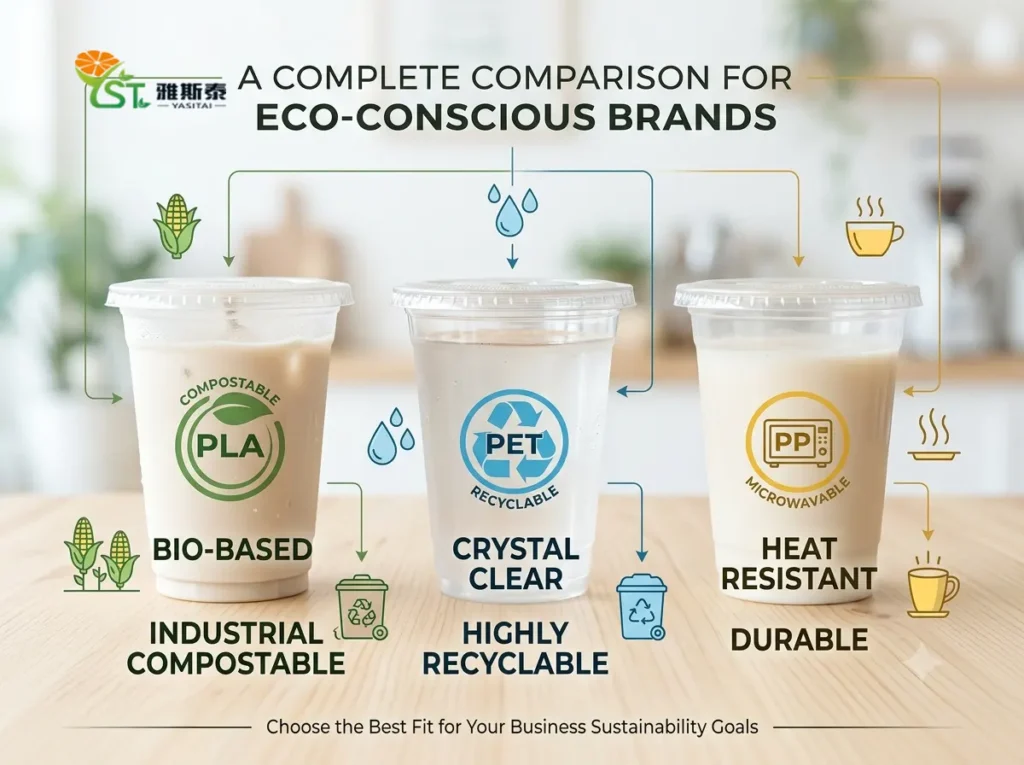
Преглед на техническите спецификации
| Характеристика / Собственост | PLA (Полилактична киселина) | PET (Полиетилен терефталат) | ПП (Полипропилен) |
| Яснота & Прозрачност | Изключителен (Кристално чист) | Изключителен (Кристално чист) | Полупрозрачен / Полупрозрачен |
| Температурно съпротивление | До 45°C (113° F.) | До 60°C (140° F.) | До 110°C (230° F.) |
| Подходящ за | Студени напитки, Ледено кафе, смутита | Студени напитки, Ледено кафе, плодови чаши | Горещо & Студени напитки, микровълново отопление |
| Устойчивост на напукване | Умерен (Твърд) | Високо (Гъвкав & Устойчив на счупване) | Високо (Гъвкав, Меко усещане) |
| Метод на запечатване | Само подходящи капаци | Само подходящи капаци | Капаци или термозапечатващо фолио |
| Край на живота / Изхвърляне | Индустриално компостиране | 100% Рециклируем (RIC 1 / Rpet) | 100% Рециклируем (RIC 5) |
1. PLA (Полилактична киселина) Чаши: Екологичната граница
PLA е пластмаса на биологична основа, получена от възобновяеми ресурси като царевично нишесте или захарна тръстика.
- Въздействие върху околната среда: PLA отговаря на международните стандарти за компостиране, като напр В 13432 (Европа) и ASTM D6400 (САЩ). Under industrial composting conditions (60°C with controlled humidity), PLA disintegrates into water and $CO_2$ within 90 да 180 дни, leaving behind no toxic residues or microplastics.
- The Limitation (Crucial for Shipping): PLA has a low thermal distortion temperature. It softens and deforms above 45°C (113° F.).Procurement Risk Note: PLA cups must be shipped via reefer containers (temperature-controlled) during summer months and stored in climate-controlled warehouses away from direct sunlight.
- Best Application: Premium juice bars, кафенета, and corporate events operating in regions with strict plastic taxes or bans (e.g., ЕС, parts of North America).
2. Чаши за домашни любимци: The Crystal-Clear Standard for Cold Drinks
PET is a petroleum-based thermoplastic resin widely recognized for its premium optical clarity.
- Естетика & Издръжливост: PET cups offer a high-gloss finish that mimics glass, maximizing the visual appeal of colorful layers in iced lattes, bubble teas, and fruit parfaits. It is highly rigid and shatter-resistant, preventing cracks during high-speed delivery or grab-and-go handling.
- Sustainability Context: While not biodegradable, PET е най-рециклираната пластмаса в света (Resin Identification Code 1). It can be continuously reprocessed into Rpet (Рециклиран домашен любимец), satisfying circular economy requirements and reducing carbon footprints by up to 60% compared to virgin PET.
- Температурен диапазон: Safe for temperatures up to 60°C (140° F.). It cannot handle hot beverages or microwave use.
3. Pp чаши: The High-Temperature Workhorse
PP is a highly versatile, low-density polymer known for its excellent thermal properties and cost efficiency.
- Temperature Superiority: With a melting point around 160°C, PP cups can comfortably withstand temperatures up to 110°C (230° F.). This makes PP the only viable option among the three for hot teas, супи, microwave reheating, and automatic cup-sealing machines.
- Гъвкавост & Запечатване: PP is more elastic than PET and PLA. It can be tightly sealed with custom printed plastic film using a heat-sealing machine—a standard setup for global bubble tea chains to ensure 100% leak-proof delivery.
- Clarity Drawback: PP is naturally translucent. Докато “High-Clarity PP” options exist, it cannot match the flawless, crystal-clear transparency of PET or PLA.
Procurement Decision Matrix: Which Should You Buy?
- Изберете PLA, ако: Your target market imposes heavy fines on traditional plastics, your brand identity revolves around zero-waste/compostability, and you only serve cold drinks below 45°C.
- Choose PET if: Premium presentation, high clarity, and crack resistance are your top priorities for iced beverages, and you require 100% recyclable packaging.
- Choose PP if: You need a cost-effective, versatile cup that handles both hot and cold liquids, or your operational workflow relies on heat-sealing film rather than plastic snap-on lids.
How YSTPACK Secures Your Supply Chain
At YSTPACK (Shenzhen Yaste Packaging Products Co., Ltd.), we manufacture all three materials utilizing high-precision thermoforming and injection molding lines.
- Our products pass strict FDA and EU food-contact material safety certifications.
- We utilize food-grade, odor-free soy-based inks for all custom logo printing.
- To ensure safe long-distance maritime transport, all bulk orders are packed in heavy-duty 5-layer corrugated cartons with high-pressure PE internal dust bags to prevent transit deformation.
Looking to customize your next batch of branded cups?
Contact our packaging engineering team today to get specific cost breakdowns, custom mold timelines, and freight-optimized mixed-loading options.