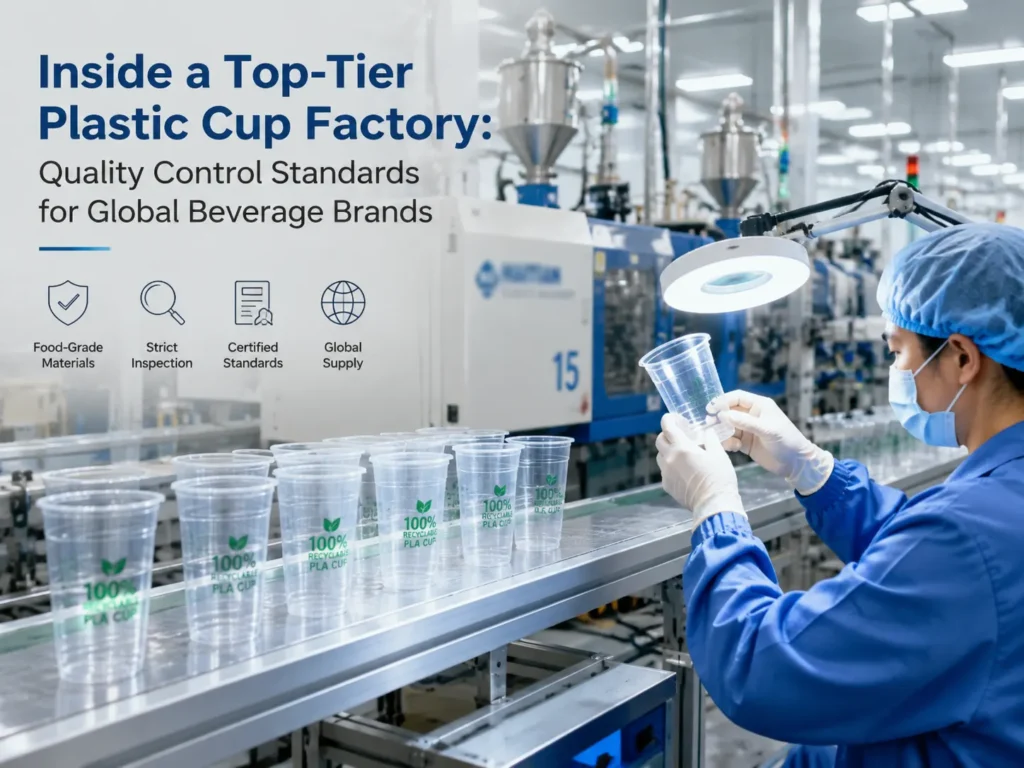
Binnen in een hoogwaardige fabriek voor plastic bekers: Kwaliteitscontrole
Binnen in een hoogwaardige fabriek voor plastic bekers: Kwaliteitscontrolenormen voor wereldwijde drankenmerken
Voor wereldwijde drankmerken, franchiseleiders, en supply chain-regisseurs, de zoektocht naar een betrouwbare fabriek voor plastic bekers is meer dan alleen een inkooptaak: het is een cruciale pijler van merkintegriteit en operationele stabiliteit. In een tijdperk waarin consumenten verwachtingen hebben ten aanzien van hygiëne, duurzaamheid, en kwaliteit staan op een recordhoogte, de keuze van een productiepartner kan een productlancering maken of breken.
Of u nu een multinationale koffieketen opschaalt of de inkoop voor een groot retailmerk beheert, je weet dat de “kunststof beker” is niet zomaar een container. Het is een touchpoint voor de consument, een bewaker van de voedselveiligheid, en een vertegenwoordiger van de toewijding van uw merk aan uitmuntendheid. Echter, Het mondiale productielandschap is enorm, en niet elke fabriek voor plastic bekers opereert op het niveau dat vereist wordt door de beste drankenmerken.
In deze uitgebreide gids, we nemen een kijkje in de activiteiten van een toonaangevende fabrikant zoals Yastai (Jaste) om de strenge kwaliteitscontrolenormen te verkennen, moderne automatisering, en voedselveiligheidscertificeringen die een topniveau definiëren fabriek voor plastic bekers.
1. De werkelijke kosten van low-end productie: Pijnpunten in de sector
In de concurrerende drankenindustrie, inkoopmanagers worden vaak geconfronteerd met de verleiding van lagere prijzen van niet-geverifieerde leveranciers. Echter, de verborgen kosten van samenwerking met een substandaard fabriek voor plastic bekers kan verwoestend zijn.
Inconsistente productkwaliteit
Low-end fabrieken maken vaak gebruik van verouderde machines en inconsistente grondstoffenmengsels. Dit resulteert in variaties in de helderheid van de beker, dikte, en gladheid van de velg. Voor een merk, A “lek” een kopje of een deksel dat niet goed past, is niet slechts een kleine ergernis, het is een snelle weg naar negatieve klantbeoordelingen en merkerosie.
Hygiëne- en besmettingsrisico's
Voedselveilige verpakkingen vereisen een steriele omgeving. Fabrieken zonder stofvrije werkplaatsen of goede centrale toevoersystemen lopen het risico dat er verontreinigingen worden geïntroduceerd, zoals stof, oliën, of zelfs biologische gevaren, in de productielijn. In een wereld van strenge voedselveiligheidsregels, Eén besmettingsincident kan leiden tot massale terugroepacties en wettelijke aansprakelijkheid.
Leveringsvertragingen en kwetsbaarheid van de toeleveringsketen
Kleinschalige of slecht beheerde fabrieken hebben vaak niet de productiecapaciteit om grote fabrieken aan te kunnen, plotselinge pieken in de vraag. Zonder geautomatiseerde systemen en efficiënte logistiek, deze leveranciers missen vaak deadlines, waardoor er voorraadtekorten op detailhandelsniveau ontstaan en de gehele toeleveringsketen wordt verstoord.
2. Het instellen van de gouden standaard: Binnen een moderne plastic bekerfabriek
Een topklasse fabriek voor plastic bekers onderscheidt zich door zware investeringen in infrastructuur. Bij Yastai, de focus ligt op het creëren van een productie-ecosysteem waarin menselijke fouten worden geminimaliseerd en de precisie wordt gemaximaliseerd.
Het centrale voersysteem
In een moderne fabriek voor plastic bekers, het proces begint met de verwerking van de grondstoffen. Toonaangevende faciliteiten maken gebruik van een centraal voersysteem met gesloten kringloop. Dit systeem transporteert automatisch kunststofharsen (zoals PP, HUISDIER, of PLA) van silo’s tot de extrusielijnen. Door deze fase te automatiseren, de fabriek elimineert het risico van handmatige verontreiniging en zorgt ervoor dat de hars puur en droog blijft, wat essentieel is voor de helderheid en kracht van het eindproduct.
Hogesnelheidsthermovormen en robotica
Het hart van de fabriek voor plastic bekers is de thermovormhal. High-end fabrikanten gebruiken geïmporteerd, thermovormmachines met meerdere stations die tienduizenden kopjes per uur kunnen produceren met precisie op micronniveau. Bij Yastai, deze machines zijn gekoppeld aan robotarmen die de bekers automatisch stapelen en verpakken. Dit “onaangetast door mensenhanden” aanpak is de ultieme waarborg voor hygiëne.
Stofvrije werkplaatsen (Klas 100,000 Cleanrooms)
Terwijl veel fabrieken in standaard industriële omgevingen opereren, een premie fabriek voor plastic bekers werkt in een gecertificeerde stofvrije werkplaats. Deze omgevingen worden strikt gecontroleerd op luchtdruk, temperatuur, en fijnstof. Werknemers moeten strenge sanitaire protocollen ondergaan, inclusief luchtdouches en gespecialiseerde beschermende uitrusting, voordat je de productievloer betreedt. Over dit controleniveau valt niet te onderhandelen voor merken die exporteren naar markten met strenge gezondheidsnormen zoals de EU en Noord-Amerika.
3. Voedselveiligheidsnormen in een fabriek van premium plastic bekers
Voor een inkoopmanager, certificeringen zijn de afkorting voor vertrouwen. Een wereldklasse fabriek voor plastic bekers claimt niet alleen kwaliteit; het bewijst dit door middel van audits door derden en naleving van internationale standaarden.
ISO 22000: De benchmark voor voedselveiligheid
ISO 22000 is een internationale standaard die de eisen specificeert voor een voedselveiligheidsmanagementsysteem. Wanneer een fabriek voor plastic bekers zoals Yastai ISO bereikt 22000 certificering, het betekent dat ze een uitgebreide gevarenanalyse en kritische controlepunten hebben geïmplementeerd (HACCP) plan. Elke fase – van de inkoop van grondstoffen tot de uiteindelijke palletisering – wordt in kaart gebracht op potentiële risico’s en wordt gemonitord om ervoor te zorgen dat deze risico’s worden beperkt.
FDA, BPI, en SGS-naleving
Verder dan ISO-normen, Topfabrieken zorgen ervoor dat hun producten voldoen aan de specifieke wettelijke vereisten van hun doelmarkten.
- FDA (ONS. Voedsel- en Geneesmiddelenadministratie): Zorgt ervoor dat de gebruikte kunststofharsen en kleurstoffen veilig zijn voor contact met voedsel.
- BPI (Instituut voor biologisch afbreekbare producten): Essentieel voor fabrieken die composteerbaar PLA produceren (Polylatuszuur) kopjes, waarmee wordt verklaard dat het product zal afbreken in commerciële composteringsinstallaties.
- SGS/QS: Biedt onafhankelijke verificatie van de materiaalveiligheid en productiekwaliteit.
4. Efficiëntie versus. Kwaliteit: De Yastai Plastic Cup-fabrieksaanpak
Een van de grootste uitdagingen voor a fabriek voor plastic bekers behoudt hoge precisie bij hoge snelheden. Veel fabrieken offeren het één op voor het ander. Echter, Yastai heeft de balans geperfectioneerd 24+ jarenlange branche-expertise en een cultuur van voortdurende verbetering.
Hoge output zonder compromissen
Met een faciliteit van 30.000 vierkante meter en tientallen hogesnelheidsproductielijnen, Yastai is ontworpen voor schaal. Echter, snelheid is nooit een excuus voor slechte kwaliteit. Elke productielijn is uitgerust met optische inspectiesystemen die gebruik maken van hogesnelheidscamera's om defecten, zoals vlekjes, op te sporen, scheuren, of misvormingen – in realtime. Defecte eenheden worden automatisch afgewezen, ervoor te zorgen dat alleen perfecte bekers de verpakkingsfase bereiken.
De rol van R&D in Productie
Een leidende fabriek voor plastic bekers is ook een vernieuwer. Yastai investeert zwaar in R&D om dunnere maar sterkere cupwanden te ontwikkelen, het verminderen van materiaalgebruik zonder de structurele integriteit van de beker in gevaar te brengen. Dit verlaagt niet alleen de kosten voor de klant, maar sluit ook aan bij de mondiale duurzaamheidsdoelstellingen door de plastic voetafdruk te verkleinen.
Maatwerk en branding
Voor franchiseleads, het vermogen om aan te passen is van cruciaal belang. Een professional fabriek voor plastic bekers biedt geavanceerde offset- en flexografische drukdiensten. Of het nu gaat om een complex meerkleurig logo of een full-wrap ontwerp, De drukkerij van Yastai gebruikt voedselveilig, inkten met lage migratie die hun levendigheid behouden, zelfs onder koude of warme omstandigheden.
5. De checklist van de Supply Chain Director: Het kiezen van de juiste partner
Als u momenteel een fabriek voor plastic bekers, hier zijn de kritische factoren waarmee u rekening moet houden:
- 1. Capaciteit en schaalbaarheid: Kan de fabriek een 50% toename van het ordervolume tijdens de piekzomermaanden?
- 2. Materiaal veelzijdigheid: Bieden ze PP aan? (voor hittebestendigheid), HUISDIER (voor ultrahelderheid), en milieuvriendelijke PLA- of RPET-opties?
- 3. Traceerbaarheid: Kan de fabriek een “papieren spoor” voor elke partij grondstoffen die u bij uw bestelling gebruikt?
- 4. Logistieke ondersteuning: Heeft de fabriek ervaring met internationale verzending?, douane documentatie, en bezorging van deur tot deur?
Yastai blinkt uit op al deze gebieden, niet alleen als leverancier optreden, maar als een strategische partner die de nuances van mondiaal supply chain management begrijpt.
6. Duurzaamheid: De toekomst van de plastic bekerfabriek
Het verhaal rond plastic verandert, en een vooruitziende blik fabriek voor plastic bekers moet die verandering leiden. Topfabrikanten verschuiven naar modellen voor de circulaire economie.
Bij Yastai, dit betekent:
- Recyclingsystemen: Al het productieschroot wordt gegranuleerd en hergebruikt in non-food toepassingen of, waar toegestaan, terug in de productiekringloop gerecycled.
- Milieuvriendelijke materialen: Biedt een breed scala aan biologisch afbreekbare PLA-bekers afkomstig van hernieuwbare bronnen zoals maïszetmeel.
- Energie-efficiëntie: Implementatie van zonne-energie en energiezuinige koelsystemen in de fabriek om de ecologische voetafdruk van elke geproduceerde kop te verkleinen.
Conclusie: Werk samen met een leider voor bulkbestellingen en fabrieksrondleidingen
In de wereld van B2B drankenvoorziening, de kwaliteit van uw verpakking is een directe weerspiegeling van de kwaliteit van uw merk. Samenwerken met een topper fabriek voor plastic bekers leuk vinden Yastai (Jaste) zorgt ervoor dat u nooit hoeft te kiezen tussen kostenefficiëntie en voedselveiligheid.
Met ruim twee decennia ervaring, state-of-the-art automatisering, en een reeks internationale certificeringen (ISO 22000, ISO 9001, FDA), Yastai is de voorkeurskeuze van wereldwijde merken die op zoek zijn naar betrouwbaarheid en uitmuntendheid.
Klaar om uw drankverpakkingen naar een hoger niveau te tillen?
Bezoek ystpack.com om ons volledige productassortiment te verkennen, van glasheldere PET-bekers tot duurzame PLA-oplossingen. Wij nodigen inkoopmanagers en supply chain-directeuren uit om contact met ons op te nemen voor bulkprijzen, aangepaste monsters, of om een virtuele of persoonlijke fabrieksrondleiding te plannen.
Ervaar de precisie van een wereldklasse fabriek voor plastic bekers–werk vandaag nog samen met Yastai.