Dentro de uma fábrica de copos de plástico de primeira linha: Controle de qualidade
Dentro de uma fábrica de copos de plástico de primeira linha: Padrões de controle de qualidade para marcas globais de bebidas
Para marcas globais de bebidas, leads de franquia, e diretores da cadeia de suprimentos, a busca por um confiável fábrica de copos de plástico é mais do que apenas uma tarefa de aquisição – é um pilar crítico da integridade da marca e da estabilidade operacional. Numa era em que as expectativas dos consumidores em relação à higiene, sustentabilidade, e a qualidade estão em alta, a escolha de um parceiro de fabricação pode fazer ou quebrar o lançamento de um produto.
Esteja você expandindo uma cadeia multinacional de café ou gerenciando as compras de uma grande marca de varejo, você sabe que o “copo de plástico” não é apenas um contêiner. É um ponto de contato para o consumidor, um guardião da segurança alimentar, e um representante do compromisso da sua marca com a excelência. No entanto, o cenário industrial global é vasto, e nem todo fábrica de copos de plástico opera no nível exigido pelas marcas de bebidas de primeira linha.
Neste guia completo, entramos nas operações de um fabricante líder como Yastai (Yaste) para explorar os rigorosos padrões de controle de qualidade, automação moderna, e certificações de segurança alimentar que definem um nível superior fábrica de copos de plástico.
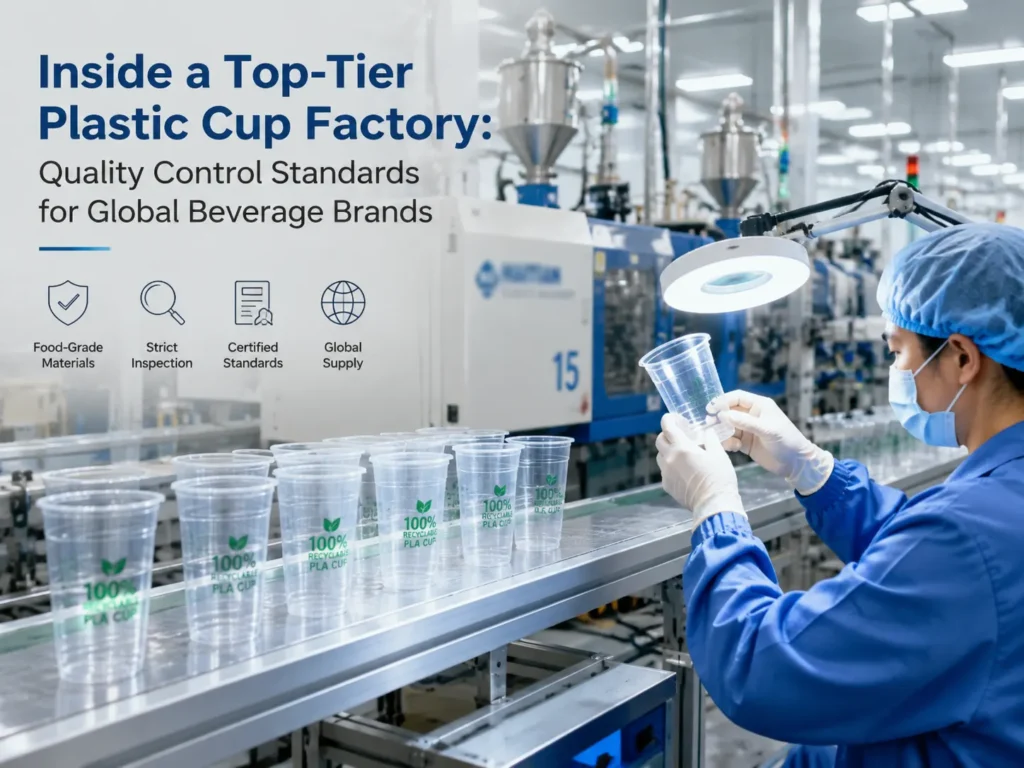
1. O custo real da fabricação de baixo custo: Pontos problemáticos da indústria
Na competitiva indústria de bebidas, os gerentes de compras muitas vezes enfrentam a tentação de preços mais baixos de fornecedores não verificados. No entanto, os custos ocultos da parceria com uma empresa abaixo do padrão fábrica de copos de plástico pode ser devastador.
Qualidade de produto inconsistente
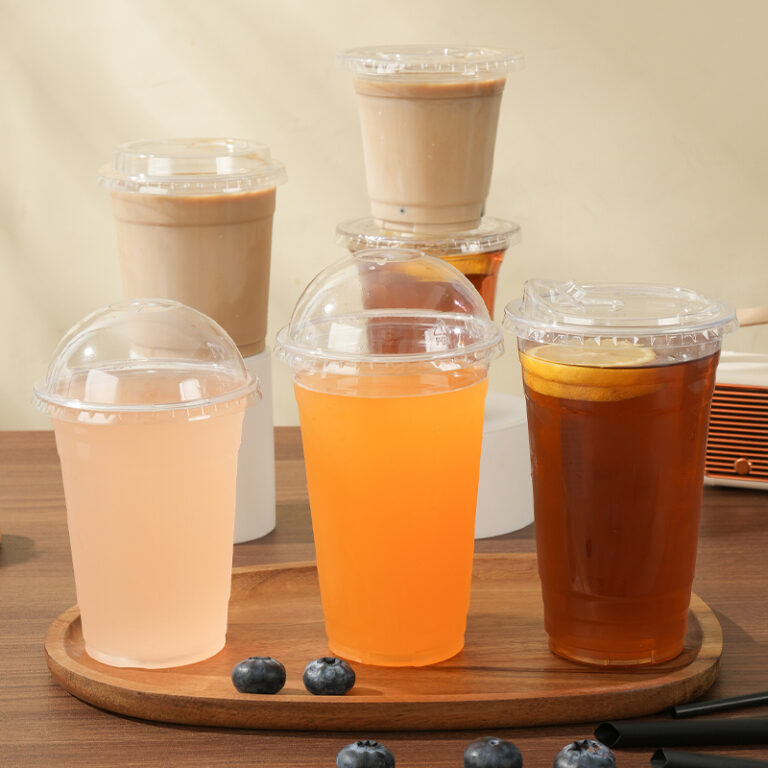
As fábricas de baixo custo geralmente utilizam máquinas antigas e misturas inconsistentes de matérias-primas. Isso resulta em variações na clareza do copo, grossura, e suavidade do aro. Para uma marca, um “vazando” copo ou tampa que não cabe com segurança não é apenas um pequeno aborrecimento – é um caminho rápido para avaliações negativas de clientes e erosão da marca.
Riscos de higiene e contaminação
Embalagens de qualidade alimentar requerem um ambiente estéril. As fábricas que não possuem oficinas livres de poeira ou sistemas de alimentação central adequados correm o risco de introduzir contaminantes, como poeira, óleos, ou mesmo perigos biológicos, na linha de produção. Num mundo com regulamentações rígidas de segurança alimentar, um incidente de contaminação pode levar a recalls massivos e responsabilidades legais.
Atrasos na entrega e fragilidade da cadeia de abastecimento
As fábricas de pequena escala ou mal geridas muitas vezes não têm capacidade de produção para lidar com grandes, picos repentinos na demanda. Sem sistemas automatizados e logística eficiente, esses fornecedores frequentemente perdem prazos, causando rupturas de estoque no varejo e interrompendo toda a cadeia de abastecimento.
2. Definindo o padrão ouro: Dentro de uma moderna fábrica de copos de plástico
Um nível superior fábrica de copos de plástico se diferencia por meio de pesados investimentos em infraestrutura. No Yastai, o foco está na criação de um ecossistema de produção onde o erro humano seja minimizado e a precisão seja maximizada.
O Sistema Central de Alimentação
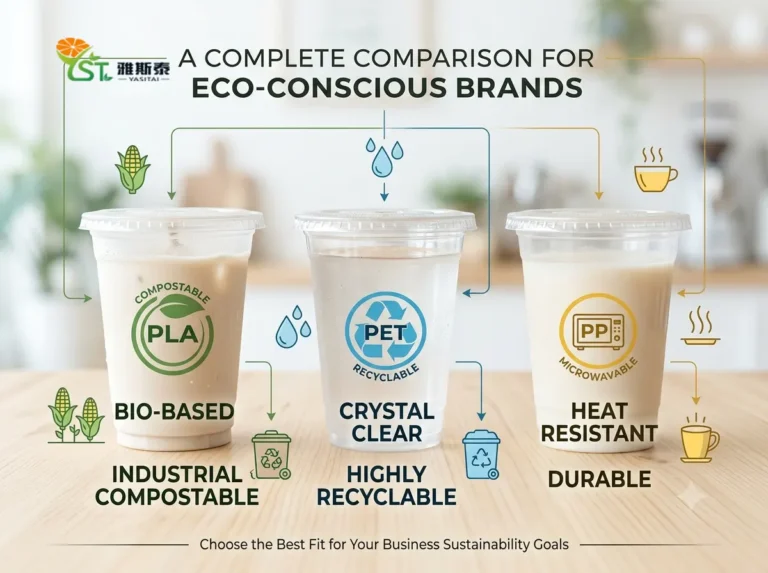
Em um moderno fábrica de copos de plástico, o processo começa com o manuseio da matéria-prima. As principais instalações utilizam um sistema de alimentação central em circuito fechado. Este sistema transporta automaticamente resinas plásticas (como PP, BICHO DE ESTIMAÇÃO, ou PLA) dos silos às linhas de extrusão. Ao automatizar esta etapa, a fábrica elimina o risco de contaminação por manuseio manual e garante que a resina permaneça pura e seca, o que é essencial para a clareza e resistência do produto final.
Termoformagem e Robótica de Alta Velocidade
O coração do fábrica de copos de plástico é a sala de termoformação. Fabricantes sofisticados usam produtos importados, máquinas termoformadoras multiestações que podem produzir dezenas de milhares de xícaras por hora com precisão em nível de mícron. Em Yastai, essas máquinas são acopladas a braços robóticos que empilham e embalam os copos automaticamente. Esse “intocado por mãos humanas” abordagem é a salvaguarda definitiva para a higiene.
Workshops sem poeira (Aula 100,000 Salas limpas)
Embora muitas fábricas operem em ambientes industriais padrão, um prêmio fábrica de copos de plástico opera em uma oficina certificada livre de poeira. Esses ambientes são rigorosamente monitorados quanto à pressão do ar, temperatura, e material particulado. Os trabalhadores devem passar por rigorosos protocolos de saneamento, incluindo chuveiros de ar e equipamentos de proteção especializados, antes de entrar na área de produção. Este nível de controle não é negociável para marcas que exportam para mercados com padrões de saúde rigorosos, como a UE e a América do Norte..
3. Padrões de segurança alimentar em uma fábrica de copos plásticos premium
Para um gerente de compras, certificações são a abreviação de confiança. Uma classe mundial fábrica de copos de plástico não reivindica apenas qualidade; isso é comprovado por meio de auditorias de terceiros e conformidade com padrões internacionais.
ISO 22000: A referência para segurança alimentar
ISO 22000 é uma norma internacional que especifica os requisitos para um sistema de gestão de segurança alimentar. Quando um fábrica de copos de plástico como Yastai alcança ISO 22000 certificação, isso significa que eles implementaram uma análise abrangente de perigos e pontos críticos de controle (APPCC) plano. Cada etapa – desde a obtenção da matéria-prima até a paletização final – é mapeada quanto a riscos potenciais e monitorada para garantir que esses riscos sejam mitigados.
FDA, BPI, e Conformidade SGS
Além dos padrões ISO, as principais fábricas garantem que seus produtos atendam aos requisitos regulatórios específicos de seus mercados-alvo.
- FDA (NÓS. Administração de Alimentos e Medicamentos): Garante que as resinas plásticas e os corantes utilizados sejam seguros para contato com alimentos.
- BPI (Instituto de Produtos Biodegradáveis): Essencial para fábricas que produzem PLA compostável (Ácido polilático) xícaras, certificando que o produto se decomporá em instalações de compostagem comercial.
- GV/QS: Fornece verificação independente da segurança do material e qualidade de fabricação.
4. Eficiência versus. Qualidade: A abordagem da fábrica de copos de plástico Yastai
Um dos maiores desafios para um fábrica de copos de plástico está mantendo alta precisão em altas velocidades. Muitas fábricas sacrificam uma pela outra. No entanto, Yastai aperfeiçoou o equilíbrio através 24+ anos de experiência no setor e uma cultura de melhoria contínua.
Alto rendimento sem compromisso
Com instalações de 30.000 metros quadrados e dezenas de linhas de produção de alta velocidade, Yastai foi projetado para escala. No entanto, velocidade nunca é desculpa para má qualidade. Cada linha de produção é equipada com sistemas de inspeção óptica que utilizam câmeras de alta velocidade para detectar defeitos, como manchas, rachaduras, ou deformidades - em tempo real. Unidades defeituosas são rejeitadas automaticamente, garantindo que apenas copos perfeitos cheguem à fase de embalagem.
O papel de R&D em Manufatura
Um líder fábrica de copos de plástico também é inovador. Yastai investe pesadamente em R&D para desenvolver paredes de copo mais finas, porém mais fortes, reduzindo o uso de material sem comprometer a integridade estrutural do copo. Isto não só reduz os custos para o cliente, mas também se alinha com os objetivos globais de sustentabilidade, reduzindo a pegada plástica.
Personalização e branding
Para leads de franquia, a capacidade de personalizar é vital. Um profissional fábrica de copos de plástico oferece serviços avançados de impressão offset e flexográfica. Quer seja um logotipo multicolorido complexo ou um design completo, O departamento de impressão da Yastai usa materiais seguros para alimentos, tintas de baixa migração que mantêm sua vitalidade mesmo sob condições frias ou quentes.
5. A lista de verificação do diretor da cadeia de suprimentos: Escolhendo o parceiro certo
Se você está atualmente avaliando um fábrica de copos de plástico, aqui estão os fatores críticos a serem considerados:
- 1. Capacidade e escalabilidade: A fábrica pode lidar com um 50% aumento no volume de pedidos durante os meses de pico do verão?
- 2. Versatilidade de materiais: Eles oferecem PP (para resistência ao calor), BICHO DE ESTIMAÇÃO (para ultra clareza), e opções ecológicas de PLA ou RPET?
- 3. Rastreabilidade: A fábrica pode fornecer um “trilha de papel” para cada lote de matérias-primas utilizadas no seu pedido?
- 4. Apoio Logístico: A fábrica tem experiência com remessa internacional, documentação aduaneira, e entrega porta a porta?
Yastai se destaca em todas essas áreas, agindo não apenas como fornecedor, mas como um parceiro estratégico que compreende as nuances da gestão da cadeia de abastecimento global.
6. Sustentabilidade: O futuro da fábrica de copos plásticos
A narrativa em torno do plástico está mudando, e uma visão de futuro fábrica de copos de plástico deve liderar essa mudança. Os fabricantes de primeira linha estão migrando para modelos de economia circular.
Em Yastai, isso significa:
- Sistemas de reciclagem: Toda a sucata de produção é granulada e reutilizada em aplicações não alimentares ou reciclada de volta ao ciclo de produção, quando permitido.
- Materiais ecológicos: Oferecendo uma ampla variedade de copos PLA biodegradáveis derivados de recursos renováveis como amido de milho.
- Eficiência Energética: Implementação de energia solar e sistemas de resfriamento energeticamente eficientes na fábrica para reduzir a pegada de carbono de cada xícara produzida.
Conclusão: Faça parceria com um líder para pedidos em massa e visitas à fábrica
No mundo do fornecimento de bebidas B2B, a qualidade da sua embalagem é um reflexo direto da qualidade da sua marca. Parceria com uma empresa de primeira linha fábrica de copos de plástico como Yastai (Yaste) garante que você nunca precise escolher entre economia e segurança alimentar.
Com mais de duas décadas de experiência, automação de última geração, e um conjunto de certificações internacionais (ISO 22000, ISO 9001, FDA), Yastai é a escolha preferida para marcas globais que buscam confiabilidade e excelência.
Pronto para elevar sua embalagem de bebidas?
Visita ystpack.com para explorar nossa linha completa de produtos, desde copos PET transparentes até soluções sustentáveis de PLA. Damos as boas-vindas aos gerentes de compras e diretores da cadeia de suprimentos para nos contatar para preços em massa, amostras personalizadas, ou para agendar uma visita virtual ou presencial à fábrica.
Experimente a precisão de uma classe mundial fábrica de copos de plástico—parceria com Yastai hoje.