НОАК против. ПЭТ против. ПП чашки: Полное сравнение эко-
НОАК против. ПЭТ против. ПП чашки
Выбор подходящего материала для одноразовых стаканчиков для напитков — это уже не просто вопрос стоимости, а вопрос характеристик продукта., температурная совместимость, и местные экологические нормы. Для сетей напитков, оптовики упаковки, и бренды, расширяющиеся в регионы со строгим запретом на одноразовый пластик, понимание технических различий между НОАК (Полилактановая кислота), ДОМАШНИЙ ПИТОМЕЦ (Полиэтилентерефталат), и ПП (Полипропилен) имеет решающее значение.
Ниже приведен подробный, сравнение на основе данных, которое поможет вам принять обоснованное решение о закупках.
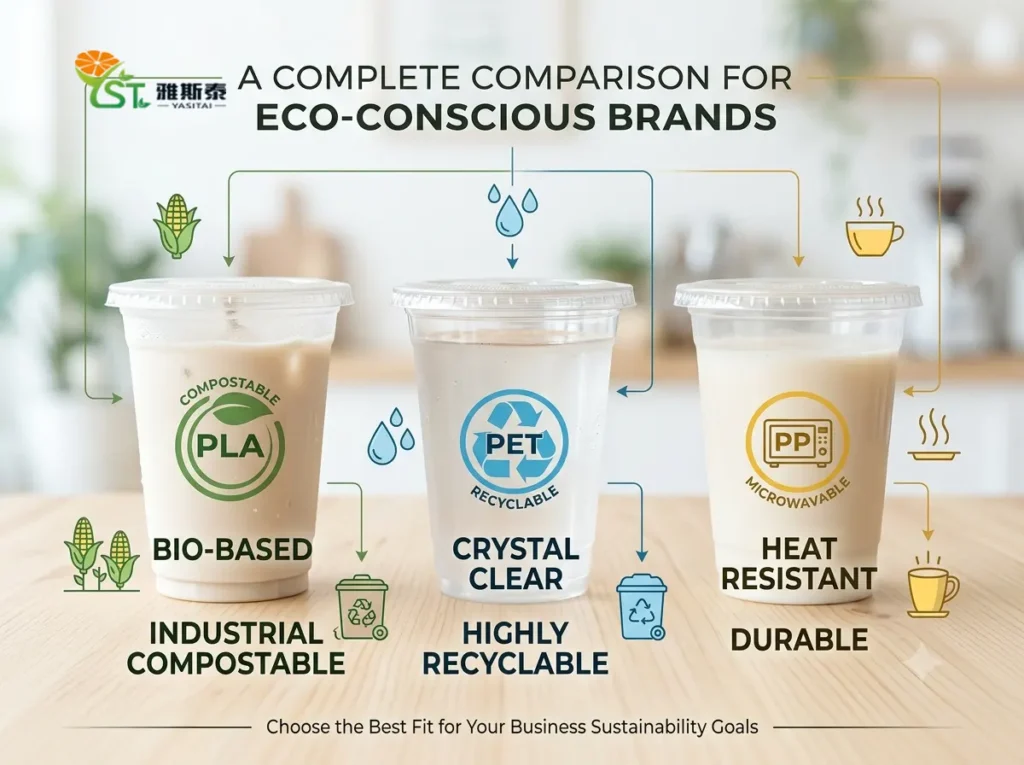
Обзор технических характеристик
| Особенность / Свойство | НОАК (Полилактановая кислота) | ДОМАШНИЙ ПИТОМЕЦ (Полиэтилентерефталат) | ПП (Полипропилен) |
| Ясность & Прозрачность | Исключительный (Кристально чистый) | Исключительный (Кристально чистый) | полупрозрачный / Полупрозрачный |
| Температурная устойчивость | До 45°С (113° F.) | До 60°С (140° F.) | До 110°С (230° F.) |
| Подходит для | Холодные напитки, кофе со льдом, смузи | Холодные напитки, кофе со льдом, фруктовые чашки | Горячий & Холодные напитки, микроволновое отопление |
| Устойчивость к взлому | Умеренный (Жесткий) | Высокий (Гибкий & Небьющийся) | Высокий (Гибкий, Мягкое ощущение) |
| Метод уплотнения | Только подходящие крышки | Только подходящие крышки | Крышки или термосвариваемая пленка |
| Конец срока службы / Утилизация | Промышленное компостирование | 100% Переработана (РИК 1 / рПЭТ) | 100% Переработана (РИК 5) |
1. НОАК (Полилактановая кислота) Кубки: Экологичный рубеж
PLA — это пластик на биологической основе, полученный из возобновляемых ресурсов, таких как кукурузный крахмал или сахарный тростник..
- Воздействие на окружающую среду: PLA соответствует международным стандартам компостирования, таким как В 13432 (Европа) и ASTM D6400 (США). В условиях промышленного компостирования (60°C с контролируемой влажностью), PLA распадается на воду и $CO_2$ внутри 90 к 180 дни, не оставляя после себя токсичных остатков и микропластика.
- Ограничение (Решающее значение для доставки): PLA имеет низкую температуру тепловых искажений.. Он размягчается и деформируется выше 45°С (113° F.).Примечание о рисках, связанных с закупками: Стаканчики из PLA должны отправляться в рефрижераторных контейнерах. (с контролем температуры) в летние месяцы и храниться на складах с кондиционируемым климатом вдали от прямых солнечных лучей..
- Лучшее приложение: Премиальные соковые батончики, кафе, и корпоративные мероприятия, проводимые в регионах со строгими налогами или запретами на пластик (НАПРИМЕР., Евросоюз, части Северной Америки).
2. ПЭТ-чашки: Кристально чистый стандарт холодных напитков
ПЭТ – это термопластичная смола на нефтяной основе, широко известная благодаря своей превосходной оптической прозрачности..
- Эстетика & Долговечность: ПЭТ-чашки имеют глянцевую поверхность, имитирующую стекло., максимизация визуальной привлекательности красочных слоев в замороженном латте, пузырьковые чаи, и фруктовое парфе. Он очень жесткий и устойчивый к разрушению, предотвращение трещин во время высокоскоростной доставки или погрузочно-разгрузочных работ.
- Контекст устойчивого развития: Хоть и не биоразлагаемый, ПЭТ – самый перерабатываемый пластик в мире (Идентификационный код смолы 1). Его можно непрерывно перерабатывать в рПЭТ (Переработанный ПЭТ), удовлетворение требований экономики замкнутого цикла и сокращение выбросов углекислого газа до 60% по сравнению с первичным ПЭТ.
- Температурная диапазон: Безопасен при температуре до 60°С (140° F.). Он не подходит для приготовления горячих напитков или использования микроволновой печи..
3. ПП чашки: Рабочая лошадка для высоких температур
ПП – универсальный материал., полимер низкой плотности, известный своими превосходными термическими свойствами и экономической эффективностью..
- Температурное превосходство: С температурой плавления около 160°C., Стаканчики из ПП могут комфортно выдерживать температуру до 110°С (230° F.). Это делает ПП единственным жизнеспособным вариантом среди трех для горячего чая., супы, микроволновый разогрев, и автоматические машины для запечатывания стаканов.
- Гибкость & Уплотнение: ПП более эластичен, чем ПЭТ и ПЛА.. Его можно плотно запечатать пластиковой пленкой с индивидуальной печатью с помощью термосварочной машины — стандартной установки для глобальных сетей пузырькового чая, обеспечивающей гарантию 100% герметичная доставка.
- Недостаток ясности: ПП естественно полупрозрачен. Пока “Высокопрозрачный ПП” варианты существуют, оно не может сравниться с безупречным, кристально чистая прозрачность PET или PLA.
Матрица решений о закупках: Что следует купить?
- Выбирайте PLA, если: Ваш целевой рынок налагает большие штрафы на традиционные пластмассы., идентичность вашего бренда основана на нулевых отходах и возможности компостирования., и вы подаете только холодные напитки ниже 45°C.
- Выбирайте ПЭТ, если: Премиум-презентация, высокая ясность, и устойчивость к растрескиванию — ваши главные приоритеты для напитков со льдом, и тебе требуется 100% перерабатываемая упаковка.
- Выбирайте ПП, если: Вам нужен экономичный, универсальная чашка, которая подходит как для горячих, так и для холодных жидкостей, или ваш рабочий процесс основан на термосвариваемой пленке, а не на пластиковых защелкивающихся крышках.
Как ЮСТПАК Защищает вашу цепочку поставок
В ЮСТПАК (Шэньчжэньская компания Yaste Packaging Products Co., ООО), мы производим все три материала, используя высокоточные линии термоформования и литья под давлением..
- Наша продукция проходит строгие Сертификаты FDA и ЕС по безопасности материалов, контактирующих с пищевыми продуктами..
- Мы используем пищевые, без запаха чернила на основе сои для любой печати индивидуального логотипа.
- Для обеспечения безопасности морских перевозок на дальние расстояния., все оптовые заказы упаковываются в прочную 5-картонные коробки из многослойного гофрированного картона с внутренними пылесборниками из полиэтилена высокого давления для предотвращения деформации при транспортировке.
Хотите персонализировать следующую партию фирменных чашек?
Свяжитесь с нашей командой инженеров по упаковке сегодня чтобы получить конкретную разбивку затрат, индивидуальные сроки изготовления пресс-форм, и варианты смешанной загрузки, оптимизированные для перевозки грузов..