Cúp PLA vs. Cúp PET: Cho nào thân thiện với môi trường nhất
Cúp PLA vs. Cúp PET: Đâu là sự lựa chọn thân thiện với môi trường tốt nhất cho doanh nghiệp của bạn?
Trong bối cảnh phát triển nhanh chóng của bao bì đồ uống toàn cầu, các nhà quản lý mua sắm và giám đốc chuỗi cung ứng phải đối mặt với một ngã rẽ quan trọng. Khi nhu cầu của người tiêu dùng về tính bền vững đạt đến mức cao nhất mọi thời đại và áp lực pháp lý—chẳng hạn như Chỉ thị về Nhựa sử dụng một lần của EU (SUPD)—thắt chặt, việc lựa chọn chất liệu cho hộp đựng đồ uống lạnh chưa bao giờ quan trọng hơn thế. Trọng tâm của cuộc tranh luận này là cốc PLA so với cốc PET truyền thống. Mặc dù cả hai đều mang lại những lợi thế khác biệt về độ rõ ràng và hiệu suất, sự nhầm lẫn cơ bản giữa “có thể phân hủy” Và “có thể tái chế” thường dẫn đến các chiến lược bền vững sai lệch và hoạt động kém hiệu quả.
Dành cho chủ thương hiệu đồ uống, quyết định không chỉ đơn thuần là về sự hấp dẫn về mặt thẩm mỹ; nó là một phép tính phức tạp liên quan đến khoa học vật liệu, cơ sở hạ tầng quản lý chất thải khu vực, phân tích dấu chân carbon, và tỷ lệ chi phí trên giá trị. Bài viết này cung cấp một cái nhìn sâu sắc có căn cứ về các đặc tính kỹ thuật, tác động môi trường, và các khung quyết định chiến lược cần thiết để xác định xem cốc PLA hay cốc PET là lựa chọn ưu việt cho doanh nghiệp của bạn.
1. Hiểu nguồn gốc vật chất: PLA vs. THÚ CƯNG
Để đưa ra quyết định mua sắm sáng suốt, trước tiên người ta phải hiểu cơ sở phân tử của hai loại polyme này. Mặc dù chúng có thể trông gần giống nhau khi nhìn bằng mắt thường, di sản hóa học và con đường cuối đời của chúng hoàn toàn trái ngược nhau.
Axit polylactic (PLA): Đối thủ dựa trên sinh học
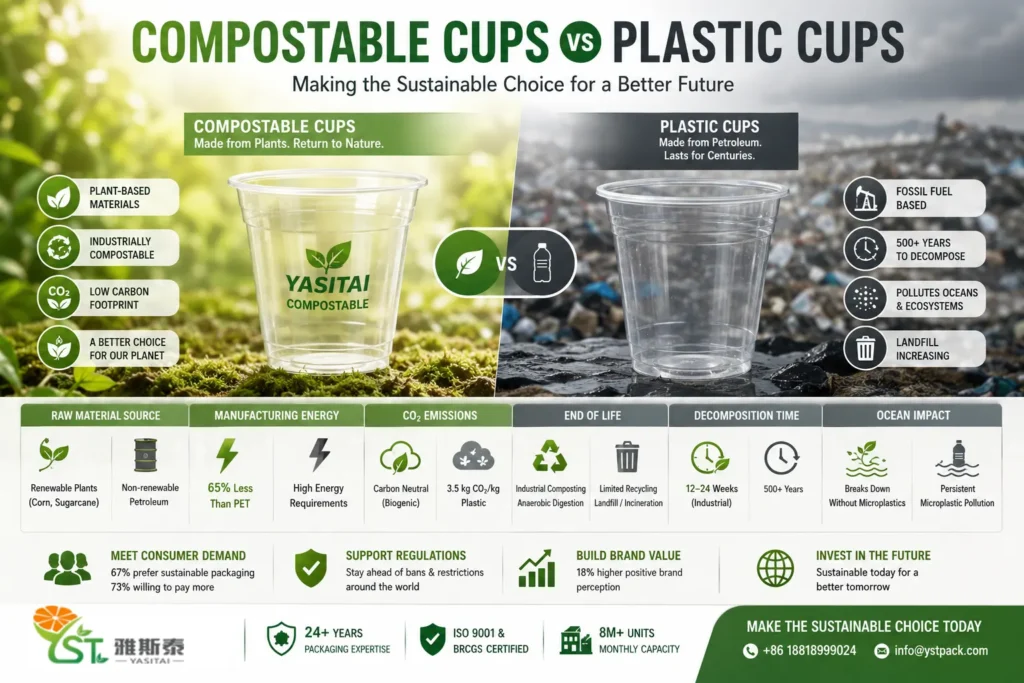
Các cốc PLA được sản xuất từ Axit Polylactic, một loại polyester nhiệt dẻo có nguồn gốc từ sinh khối tái tạo. Tiêu biểu, điều này liên quan đến quá trình lên men tinh bột thực vật—phổ biến nhất là ngô, mía, hoặc củ cải đường—thành axit lactic, sau đó được polyme hóa. Bởi vì nó có nguồn gốc từ cây trồng tái tạo hàng năm chứ không phải từ nhiên liệu hóa thạch, PLA thường được bán trên thị trường như một giải pháp thay thế trung hòa carbon. Từ góc độ kỹ thuật, PLA là một sản phẩm dựa trên sinh học, nhựa nhiệt dẻo hoạt tính sinh học cung cấp một “từ nôi tới cổng” lượng khí thải carbon thấp hơn đáng kể so với nhựa làm từ dầu mỏ.
Polyetylen terephthalate (THÚ CƯNG): Tiêu chuẩn vàng tái chế
Polyetylen terephthalate (THÚ CƯNG) là một loại polyester có nguồn gốc từ dầu mỏ. Nó đã trở thành tiêu chuẩn công nghiệp trong nhiều thập kỷ do tỷ lệ sức mạnh trên trọng lượng đặc biệt của nó, đặc tính rào cản khí, và sự rõ ràng chưa từng có. Không giống như PLA, PET là một loại polymer có độ ổn định cao, không bị phân hủy trong điều kiện môi trường tiêu chuẩn. Tuy nhiên, sức mạnh chính của nó trong nền kinh tế tuần hoàn nằm ở khả năng tái chế. PET là loại nhựa được tái chế nhiều nhất trên toàn cầu, với cơ sở hạ tầng trưởng thành (Rpet) cho phép có nhiều vòng đời, giảm nhu cầu chiết xuất nhựa nguyên chất.
2. Phân tích so sánh: Sự rõ ràng, Điện trở nhiệt, và Hiệu suất
Khi đánh giá một cốc PLA chống lại một đối tác PET cho mục đích thương mại, các chỉ số hiệu suất trong “giai đoạn sử dụng” là điều tối quan trọng để duy trì tính toàn vẹn của thương hiệu và sự hài lòng của người tiêu dùng.
Độ rõ quang học và tính thẩm mỹ
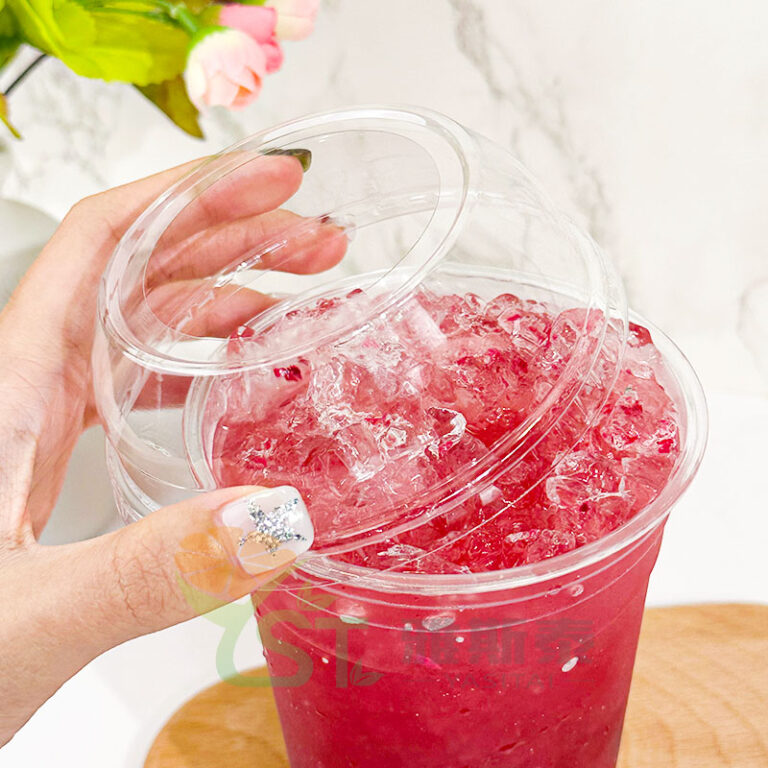
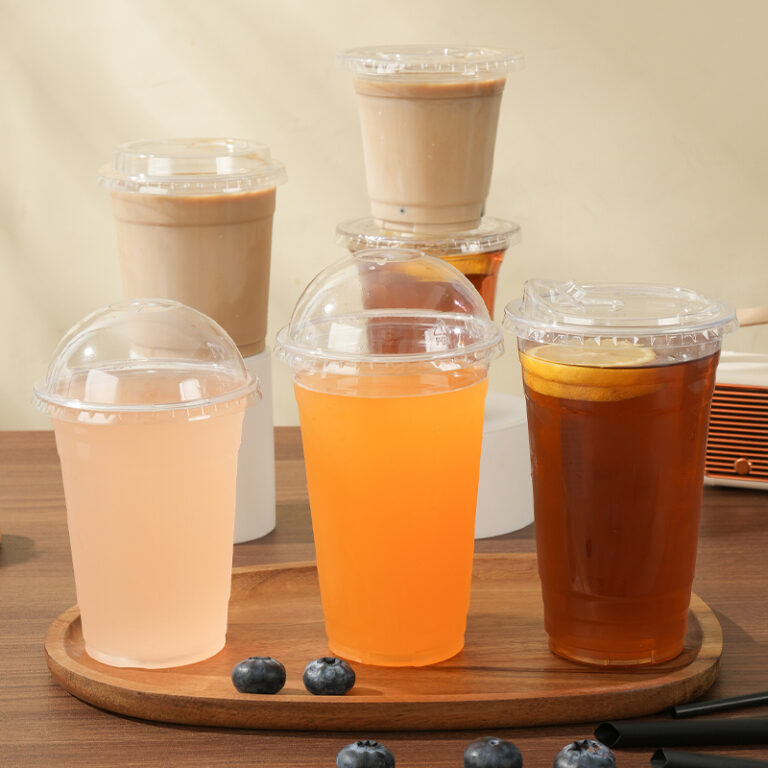
Cả hai vật liệu đều cung cấp “tinh thể rõ ràng” minh bạch, điều cần thiết để thể hiện màu sắc rực rỡ của nước trái cây, cà phê đá, và soda thủ công. PET theo truyền thống giữ ưu thế về độ bóng và “lấp lánh.” Tuy nhiên, Công nghệ nhựa PLA cao cấp hiện đại đã thu hẹp khoảng cách này. Một phí bảo hiểm cốc PLA giờ đây mang lại vẻ ngoài và cảm giác cao cấp tương tự như PET, đảm bảo rằng việc chuyển sang vật liệu dựa trên sinh học không làm giảm chất lượng cho người dùng cuối.
Tính ổn định nhiệt và tính toàn vẹn của kết cấu
Đây là nơi hai vật liệu phân kỳ đáng kể. PLA tiêu chuẩn có nhiệt độ chuyển hóa thủy tinh tương đối thấp (thường là từ 55°C đến 60°C). Do đó, một tiêu chuẩn cốc PLA bị giới hạn nghiêm ngặt đối với các ứng dụng đồ uống lạnh. Tiếp xúc với nhiệt độ môi trường cao trong quá trình vận chuyển hoặc bảo quản trong kho không được kiểm soát khí hậu có thể dẫn đến biến dạng. Ngược lại, PET vẫn ổn định ở nhiệt độ khoảng 70°C, cung cấp biên độ an toàn rộng hơn một chút cho chuỗi cung ứng hoạt động ở vùng khí hậu nhiệt đới. Dành cho các thương hiệu yêu cầu khả năng chịu nhiệt cho các ứng dụng đổ đầy nóng, CPLA chuyên ngành (PLA kết tinh) tồn tại, mặc dù nó hy sinh tính minh bạch có trong cốc PLA tiêu chuẩn.
3. Nghịch lý môi trường: Phân trộn công nghiệp vs. Tái chế vật lý
Cốt lõi của “Cúp PLA vs. cốc PET” cuộc tranh luận nằm ở quá trình xử lý cuối đời. Hiểu sai về những con đường này có thể dẫn đến “tẩy xanh” cáo buộc hoặc gây tổn hại môi trường ngoài ý muốn.
Vòng đời của một giải PLA Cup
Đề xuất giá trị cơ bản của cốc PLA đó là nó “có thể phân hủy được.” Tuy nhiên, điều quan trọng cần lưu ý là PLA có thể phân hủy công nghiệp (ASTM D6400 hoặc EN 13432 tiêu chuẩn). Nó sẽ không bị phân hủy trong thùng ủ phân ở sân sau hoặc môi trường biển trong khoảng thời gian hợp lý. Tại cơ sở sản xuất phân bón công nghiệp, nhiệt độ ở đâu, độ ẩm, và hoạt động của vi sinh vật được kiểm soát chặt chẽ, cốc PLA sẽ tan thành nước, CO2, và sinh khối ở dưới 90 ngày. Nếu thương hiệu của bạn hoạt động ở khu vực có cơ sở hạ tầng thu gom chất thải hữu cơ và phân bón công nghiệp mạnh mẽ, PLA cung cấp một vòng tròn thực sự, giải pháp không rác thải.
Tính tuần hoàn của RPET
Trong khi PET có nguồn gốc từ nhiên liệu hóa thạch, câu chuyện môi trường của nó đã chuyển sang hướng “vòng kín” người mẫu. Vì PET dễ dàng được sắp xếp theo NIR (Cận hồng ngoại) cảm biến trong các cơ sở tái chế, nó có thể được rửa sạch, cắt nhỏ, và được ép viên trở lại thành RPET cấp thực phẩm (Thú cưng tái chế). Dành cho giám đốc chuỗi cung ứng, sử dụng PET có nghĩa là khai thác hệ thống toàn cầu nơi vật liệu có thể được thu hồi. Lượng khí thải carbon của cốc RPET có thể, trong một số trường hợp, cạnh tranh với cốc làm từ sinh học khi yếu tố hậu cần của quá trình ủ phân được tính đến.
4. Khung quyết định: Cách chọn cho doanh nghiệp của bạn
Người quản lý mua sắm nên sử dụng khuôn khổ sau đây khi quyết định xem có nên tiêu chuẩn hóa quy trình đấu thầu hay không cốc PLA hoặc gắn bó với PET/RPET.
Đánh giá cơ sở hạ tầng
- Chọn PLA nếu: Các thị trường chính của bạn đã thiết lập các dòng phân bón thương mại (ví dụ., một phần của Bắc Âu, San Francisco, hoặc Seattle). PLA là tuyệt đỉnh “tuyên bố” tài liệu dành cho các thương hiệu cam kết hướng tới một tương lai dựa trên thực vật.
- Chọn PET/RPET nếu: Cơ sở tiêu dùng của bạn phụ thuộc vào việc tái chế lề đường. Ném một cốc PLA vào thùng tái chế nhựa thực sự có thể làm ô nhiễm dòng PET, vì hai vật liệu này không thể được tái chế cùng nhau.
Tường thuật thương hiệu và giáo dục người tiêu dùng
Nếu nhận diện thương hiệu của bạn được xây dựng trên “Dựa trên thực vật” hoặc “Tự nhiên” thành phần, cái cốc PLA củng cố thông điệp đó một cách hoàn hảo. Tuy nhiên, nó yêu cầu ghi nhãn rõ ràng để đảm bảo người tiêu dùng bỏ nó vào thùng rác hữu cơ. Nếu thương hiệu của bạn tập trung vào “Không lãng phí” Và “Kinh tế tuần hoàn,” cốc RPET có tỷ lệ nội dung sau tiêu dùng cao có thể phù hợp hơn với mục tiêu của bạn.
Cảnh quan pháp lý
Đi trước pháp luật. Nhiều khu vực pháp lý đang chuyển sang cấm nhựa không thể phân hủy trong các môi trường cụ thể (chẳng hạn như lễ hội hoặc sân vận động khép kín). Trong những môi trường này, cái cốc PLA thường là lựa chọn tuân thủ duy nhất cho đồ uống dùng một lần.
5. Sản xuất xuất sắc: Lợi thế của Yastai
Bất kể chiến lược của bạn có yêu cầu vật liệu có thể phân hủy hay không cốc PLA hoặc cốc PET có khả năng tái chế cao, chất lượng của nhà sản xuất là mảnh ghép cuối cùng. Tại Yastai (men), chúng tôi đã dành hơn 25 năm hoàn thiện nghệ thuật và khoa học về bao bì đồ uống.
Khả năng kép trong PLA và RPET
Yastai là một trong số ít các nhà sản xuất toàn cầu có dây chuyền ép đùn và tạo hình nhiệt chuyên dụng cần thiết để sản xuất cả sản phẩm PLA có độ trong cao và sản phẩm RPET cấp thực phẩm. Chúng tôi hiểu rằng một “một kích thước phù hợp với tất cả” Cách tiếp cận không hiệu quả đối với chuỗi cung ứng toàn cầu. Khả năng kép của chúng tôi cho phép chúng tôi hoạt động như một đối tác chiến lược, cung cấp cốc PLA cho các thị trường chuyển tiếp sinh thái và các giải pháp RPET cho các kênh bán lẻ khối lượng lớn của bạn.
Đảm bảo chất lượng và tiêu chuẩn toàn cầu
Trong lĩnh vực B2B, chứng nhận là tiền tệ của sự tin cậy. Yastai tự hào duy trì một Xếp hạng BRC A+, cấp cao nhất của Tiêu chuẩn Toàn cầu về An toàn Thực phẩm. Điều này đảm bảo rằng mọi cốc—dù là cốc sinh học hay cốc tái chế—đều đáp ứng các tiêu chuẩn vệ sinh và di chuyển nghiêm ngặt nhất mà các thương hiệu đồ uống đa quốc gia yêu cầu. Của chúng tôi 25 nhiều năm chuyên môn có nghĩa là chúng tôi đã giải quyết được các vấn đề chung về tính nhất quán của nắp, khả năng xếp chồng lên nhau, và độ mịn của vành xe thường gây khó chịu cho các nhà sản xuất nhỏ hơn.
Phần kết luận: Tương lai được thiết kế riêng
Sự lựa chọn giữa một cốc PLA và cốc PET không phải là vấn đề là chất liệu gì “tốt hơn” trong chân không, nhưng điều này hiệu quả hơn cho bối cảnh hậu cần và môi trường cụ thể của bạn. PLA mang đến một sự khởi đầu mang tính cách mạng từ nhiên liệu hóa thạch và một kết thúc sạch sẽ ở các thị trường sẵn sàng làm phân trộn. PET cung cấp một giải pháp đã được chứng minh, bền, và con đường có khả năng tái chế cao cho tính tuần hoàn chính thống.
Khi bạn điều hướng các quyết định phức tạp về chuỗi cung ứng này, hợp tác với nhà sản xuất cung cấp quyền kỹ thuật, được chứng nhận an toàn, và một phần tư thế kỷ kinh nghiệm. Yastai (men) sẵn sàng giúp bạn thực hiện chiến lược đóng gói để bảo vệ sản phẩm của bạn, làm hài lòng khách hàng của bạn, và tôn trọng hành tinh.
Liên hệ Yastai ngay hôm nay để yêu cầu các thông số kỹ thuật hoặc mẫu của các loại cốc PLA và RPET cao cấp của chúng tôi.