PLA vs. Thú cưng vs. PP cốc: Một so sánh hoàn chỉnh về Eco-
PLA vs. Thú cưng vs. PP cốc
Việc chọn chất liệu phù hợp cho cốc đựng đồ uống dùng một lần của bạn không còn chỉ là vấn đề chi phí mà còn là hiệu suất của sản phẩm, khả năng tương thích nhiệt độ, và các quy định về môi trường của địa phương. Đối với chuỗi đồ uống, nhà bán buôn bao bì, và các thương hiệu mở rộng sang các khu vực có lệnh cấm nhựa sử dụng một lần nghiêm ngặt, hiểu sự khác biệt về mặt kỹ thuật giữa PLA (Axit polylactic), THÚ CƯNG (Polyetylen terephthalate), Và PP (Polypropylen) rất quan trọng.
Dưới đây là chi tiết, so sánh dựa trên dữ liệu để giúp bạn đưa ra quyết định mua sắm sáng suốt.
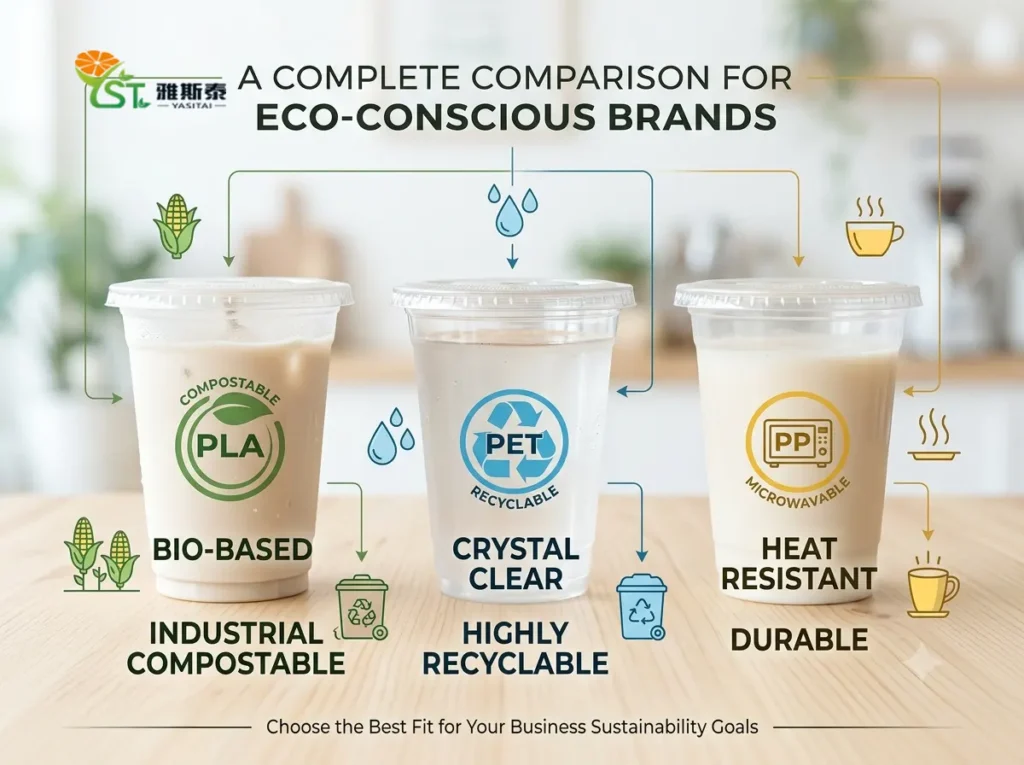
Thông số kỹ thuật Tổng quan
| Tính năng / Tài sản | PLA (Axit polylactic) | THÚ CƯNG (Polyetylen terephthalate) | PP (Polypropylen) |
| Sự rõ ràng & Tính minh bạch | Đặc biệt (Pha lê trong suốt) | Đặc biệt (Pha lê trong suốt) | mờ / Nửa rõ ràng |
| Chịu nhiệt độ | Lên đến 45°C (113° f) | Lên đến 60°C (140° f) | Lên đến 110°C (230° f) |
| Thích hợp cho | Đồ uống lạnh, Cà phê đá, sinh tố | Đồ uống lạnh, Cà phê đá, cốc trái cây | Nóng & đồ uống lạnh, sưởi ấm bằng lò vi sóng |
| Chống nứt | Vừa phải (cứng nhắc) | Cao (Linh hoạt & Chống vỡ) | Cao (Linh hoạt, Cảm giác mềm mại) |
| Phương pháp niêm phong | Chỉ có nắp phù hợp | Chỉ có nắp phù hợp | Nắp hoặc màng dán nhiệt |
| Cuối đời / Xử lý | Ủ phân công nghiệp | 100% Có thể tái chế (RIC 1 / rpet) | 100% Có thể tái chế (RIC 5) |
1. PLA (Axit polylactic) cốc: Biên giới thân thiện với môi trường
PLA là một loại nhựa sinh học có nguồn gốc từ các nguồn tài nguyên tái tạo như tinh bột ngô hoặc mía.
- Tác động môi trường: PLA tuân thủ các tiêu chuẩn phân bón quốc tế như TRONG 13432 (Châu Âu) Và ASTM D6400 (Hoa Kỳ). Trong điều kiện ủ phân công nghiệp (60°C với độ ẩm được kiểm soát), PLA phân hủy thành nước và $CO_2$ bên trong 90 ĐẾN 180 ngày, không để lại dư lượng độc hại hoặc vi hạt nhựa.
- Hạn chế (Quan trọng cho việc vận chuyển): PLA có nhiệt độ biến dạng nhiệt thấp. Nó mềm đi và biến dạng ở trên 45°C (113° f).Lưu ý rủi ro trong đấu thầu: Cốc PLA phải được vận chuyển bằng container lạnh (kiểm soát nhiệt độ) trong những tháng mùa hè và được bảo quản trong kho có hệ thống kiểm soát khí hậu, tránh ánh nắng trực tiếp.
- Ứng dụng tốt nhất: Thanh nước trái cây cao cấp, quán cà phê, và các sự kiện của công ty hoạt động ở những khu vực có lệnh cấm hoặc thuế nhựa nghiêm ngặt (ví dụ., EU, một phần của Bắc Mỹ).
2. Cốc thú cưng: Tiêu chuẩn trong suốt như pha lê cho đồ uống lạnh
PET là một loại nhựa nhiệt dẻo gốc dầu mỏ được công nhận rộng rãi nhờ độ trong quang học cao cấp.
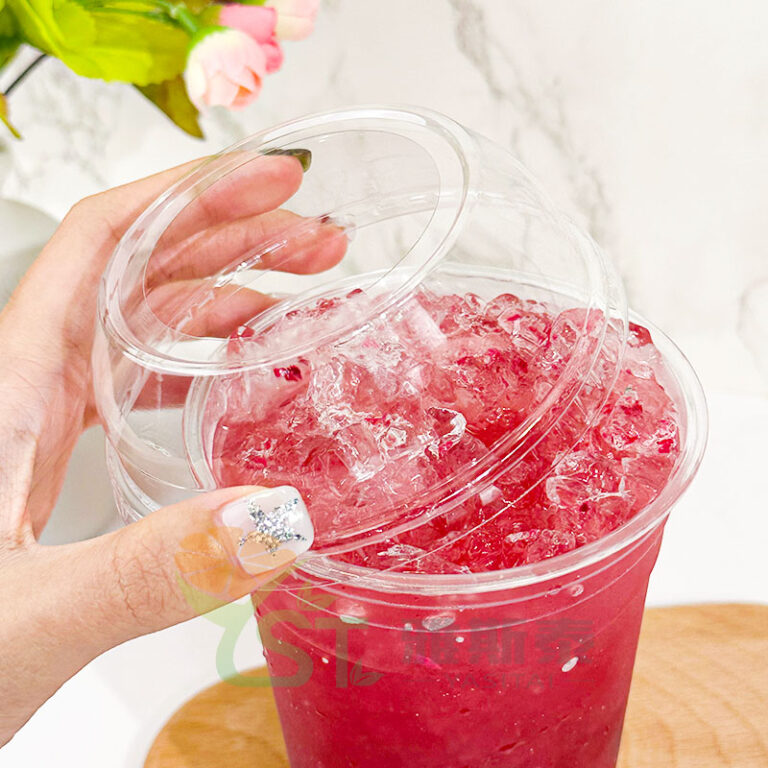
- thẩm mỹ & Độ bền: Cốc PET có độ bóng cao tương tự như thủy tinh, tối đa hóa sự hấp dẫn trực quan của các lớp đầy màu sắc trong latte đá, trà bong bóng, và parfait trái cây. Nó có độ cứng cao và chống vỡ, ngăn ngừa các vết nứt trong quá trình vận chuyển tốc độ cao hoặc xử lý lấy và mang đi.
- Bối cảnh bền vững: Mặc dù không thể phân hủy sinh học, PET là loại nhựa được tái chế nhiều nhất trên toàn cầu (Mã nhận dạng nhựa 1). Nó có thể được tái xử lý liên tục thành rpet (Thú cưng tái chế), đáp ứng các yêu cầu của nền kinh tế tuần hoàn và giảm lượng khí thải carbon tới 60% so với PET nguyên chất.
- Phạm vi nhiệt độ: An toàn với nhiệt độ lên tới 60°C (140° f). Nó không thể xử lý đồ uống nóng hoặc sử dụng lò vi sóng.
3. PP cốc: Con ngựa làm việc ở nhiệt độ cao
PP rất linh hoạt, polymer mật độ thấp được biết đến với tính chất nhiệt tuyệt vời và hiệu quả chi phí.
- Ưu thế về nhiệt độ: Với điểm nóng chảy khoảng 160°C, Cốc PP có thể chịu được nhiệt độ lên tới 110°C (230° f). Điều này làm cho PP trở thành lựa chọn khả thi duy nhất trong số ba loại trà nóng, súp, hâm nóng bằng lò vi sóng, và máy dán cốc tự động.
- Linh hoạt & Niêm phong: PP đàn hồi tốt hơn PET và PLA. Nó có thể được niêm phong chặt chẽ bằng màng nhựa in tùy chỉnh bằng máy hàn nhiệt—một thiết lập tiêu chuẩn cho các chuỗi trà sữa trân châu toàn cầu để đảm bảo 100% giao hàng chống rò rỉ.
- Hạn chế rõ ràng: PP trong mờ tự nhiên. Trong khi “PP có độ trong cao” tùy chọn tồn tại, nó không thể phù hợp với sự hoàn hảo, độ trong suốt như pha lê của PET hoặc PLA.
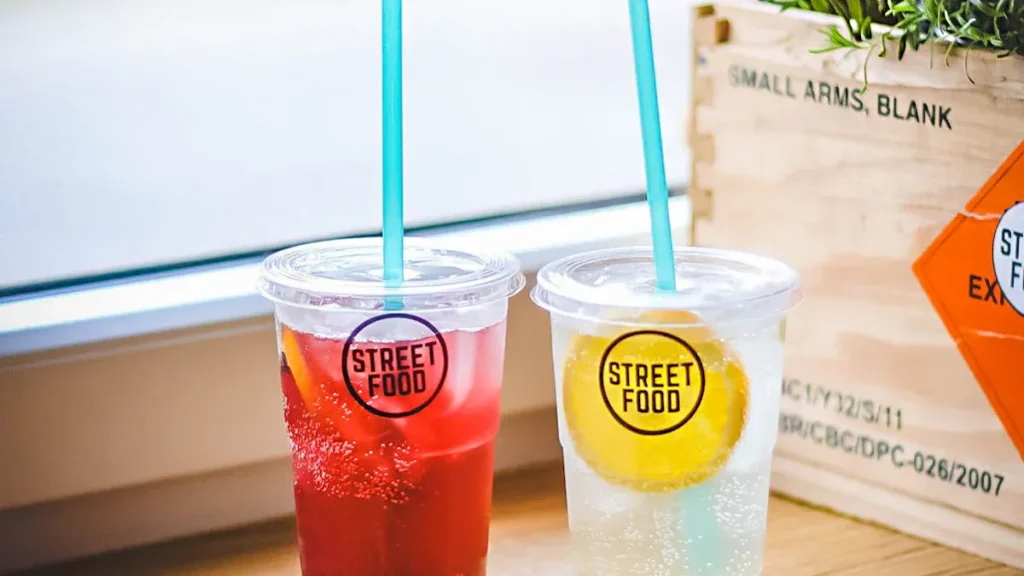
Ma trận quyết định mua sắm: Bạn nên mua cái nào?
- Chọn PLA nếu: Thị trường mục tiêu của bạn áp đặt mức phạt nặng đối với nhựa truyền thống, nhận diện thương hiệu của bạn xoay quanh vấn đề không lãng phí/khả năng phân hủy, và bạn chỉ phục vụ đồ uống lạnh dưới 45°C.
- Chọn PET nếu: Bản trình bày cao cấp, độ rõ cao, và khả năng chống nứt là ưu tiên hàng đầu của bạn đối với đồ uống có đá, và bạn yêu cầu 100% bao bì có thể tái chế.
- Chọn PP nếu: Bạn cần một giải pháp tiết kiệm chi phí, Cốc đa năng đựng được cả chất lỏng nóng và lạnh, hoặc quy trình vận hành của bạn dựa vào màng hàn nhiệt thay vì nắp đậy bằng nhựa.
Làm sao YSTPACK Đảm bảo chuỗi cung ứng của bạn
Tại YSTPACK (Công ty TNHH Sản phẩm Bao bì Yaste Thâm Quyến, Công ty TNHH), chúng tôi sản xuất cả ba loại vật liệu này bằng cách sử dụng dây chuyền ép phun và ép nóng có độ chính xác cao.
- Sản phẩm của chúng tôi vượt qua nghiêm ngặt Chứng nhận an toàn vật liệu tiếp xúc với thực phẩm của FDA và EU.
- Chúng tôi sử dụng cấp thực phẩm, không mùi mực làm từ đậu nành cho tất cả các in logo tùy chỉnh.
- Để đảm bảo an toàn vận tải biển đường dài, tất cả các đơn đặt hàng số lượng lớn được đóng gói trong nhiệm vụ nặng nề 5-thùng carton sóng nhiều lớp với túi bụi bên trong PE áp suất cao để ngăn ngừa biến dạng vận chuyển.
Đang tìm cách tùy chỉnh lô cốc có thương hiệu tiếp theo của bạn?
Hãy liên hệ với đội ngũ kỹ thuật đóng gói của chúng tôi ngay hôm nay để có được bảng phân tích chi phí cụ thể, mốc thời gian khuôn tùy chỉnh, và các tùy chọn tải hỗn hợp được tối ưu hóa cho vận chuyển hàng hóa.