Eco Friendly Disposable Cups: Essential Guide to EU Pla
Navigating evolving international environmental legislation can feel daunting for commercial beverage brands, café franchises, at mga distributor ng packaging. Sourcing compliant eco friendly disposable cups requires verified resin certifications rather than vague marketing slogans. Sa Yasitai (YST Pack), aming 30,000 square meter cleanroom facility produces over 300 million certified cups monthly, supporting global importers through strict regulatory transitions.
Failure to meet regional single-use plastics mandates can trigger severe customs rejections, heavy financial penalties, and supply chain disruptions. In this engineering guide, we examine EU Single-Use Plastics Directive (SUPD) pagsunod, material trade-offs between PLA and RPET, thermal stability safeguards, and factory audit verification.
Talaan ng mga Nilalaman
Understanding EU Single-Use Plastics Mandates for Eco Friendly Disposable Cups
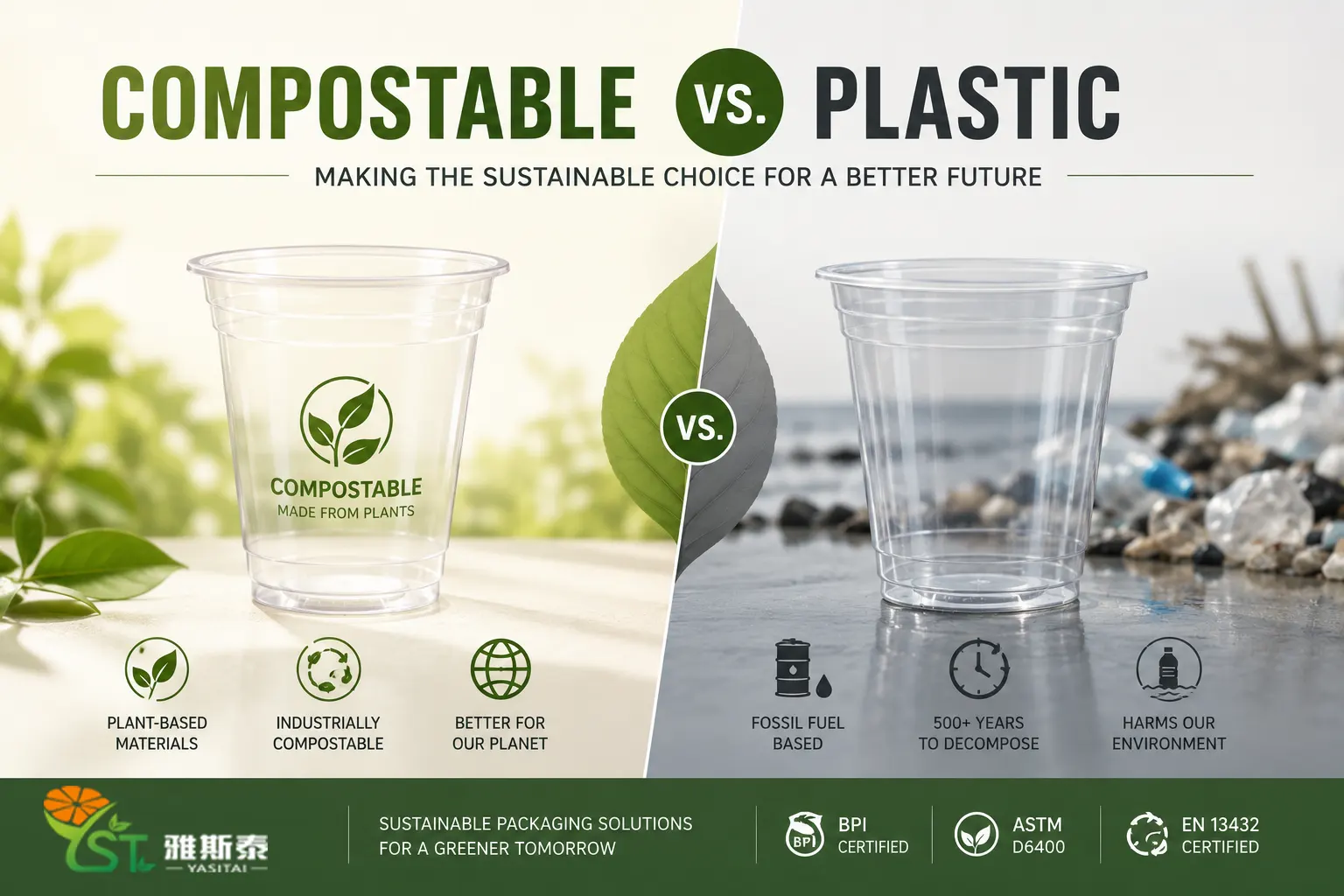
The European Union Directive 2019/904 sets rigorous standards to curb plastic pollution across member states. Under these rules, single-use beverage containers made partially or entirely of synthetic polymers face strict extended producer responsibility (EPR) obligations and mandatory turtle-marking labels. Commercial buyers must understand that bio-based plastics such as Polylactic Acid (PLA) remain classified as plastics under current SUPD definitions.
To ensure full legal compliance, European importers must verify that clear PLA cups carry harmonized embossed or printed SUPD dead-turtle logos in the destination market’s official languages. Higit pa rito, our BRC A+ certified extrusion processes ensure that custom printed inks remain non-toxic and fully compatible with industrial composting streams.
In parallel, European markets heavily incentivize high-recycled-content RPET packaging through reduced plastic tax tariffs. Selecting between certified industrial compostability and closed-loop circular recycling depends largely on local municipal waste infrastructure across your target distribution territories.
Material Pathways: Comparing PLA, RPET, and Aqueous Barrier Cups
Commercial buyers seeking sustainable alternatives generally evaluate three primary polymer solutions for cold and iced beverage programs. Polylactic Acid (PLA), derived from renewable cornstarch, offers pristine optical clarity exceeding 92% light transmittance, making iced lattes and bubble teas visually vibrant. You can reference our detailed breakdown on PLA vs PET cups for in-depth resin mechanics.
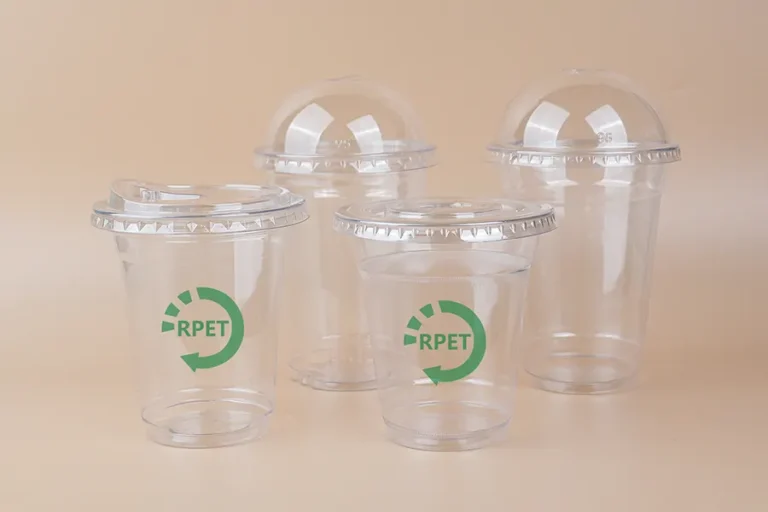
Recycled Polyethylene Terephthalate (RPET) represents the leading circular economy solution, incorporating up to 100% post-consumer recycled flakes certified under Global Recycled Standard (GRS). RPET delivers superior thermal resilience up to 65°C, effectively eliminating heat-warping risks during mid-summer container transit across southern European ports.
For hot beverage programs, aming biodegradable coffee cups utilize certified aqueous dispersion coatings that replace traditional petroleum-derived PE linings. This plastic-free barrier technology enables straightforward repulpability within standard paper recycling facilities without specialized separation equipment.
Comparative Specification Matrix for Sustainable Beverage Packaging
To simplify procurement decisions, our quality assurance team compiled this comparative performance overview across sustainable cup materials. Understanding these parameters helps brand owners balance environmental claims against operational storage realities.
| Material Grade | Feedstock Source | Operating Limit | Key Certifications | EU Tax & Regulatory Status |
|---|---|---|---|---|
| Pure Ingeo PLA | 100% Plant Sugars (mais) | -20°C to 45°C | BPI / DIN CERTCO EN 13432 | Requires EU SUPD Logo; Industrial Compost |
| GRS-Certified RPET | Post-Consumer Bottles | -40°C to 65°C | GRS / EFSA / FDA Approved | Exempt from Virgin Plastic Taxes; 100% Recyclable |
| Aqueous Coated Paper | FSC Certified Pulp | -20°C hanggang 100°C | SA 13432 / PTS Recyclability | Plastic-Free Classification; Repulpable |
| Bio-PBS Hybrid | Bio-based / Synthetic Blend | -10°C to 85°C | TÜV Austria Home Compost | Emerging Bio-polymer; Semi-Clear to Opaque |
Procurement teams must align their chosen packaging grade with regional composting infrastructure and seasonal distribution logistics. For hot coffee and cold smoothie combo menus, pairing aqueous paper hot cups with RPET or PLA cold cups provides an uncompromising, fully certified sustainable brand image.
Overcoming Manufacturing Challenges in Bio-Plastic Cold Cup Production
Standard bio-polymers exhibit narrower thermoforming process windows compared to legacy petroleum plastics. Untreated PLA resin becomes brittle under rapid thermal cycling, leading to micro-cracking along rolled drinking rims. Sa aming 24+ years of precision extrusion practice, continuous multi-zone crystallization control yields robust, flexible cup rims that guarantee leakproof lid engagement.
Thermal stability during ocean shipping poses another critical hurdle for international beverage distributors. In our climate-controlled export packaging protocol, bio-resin pallets are wrapped in thermal reflective barriers with desiccant protection to prevent premature softening in equatorial transit lanes. This proactive protection guarantees carton integrity from our factory floor to your regional warehouse.
Bukod dito, consistent sidewall caliper prevents automated cup drop failures on high-speed commercial dispensing towers. Our automated laser inspection systems verify rim roundness and bottom wall thickness across every production run, eliminating costly jams in commercial coffeehouse chains.

Checklist ng Pag-audit ng Supplier: 5 Verification Documents for Regulatory Compliance
Before releasing milestone payments for custom sustainable packaging orders, commercial procurement managers must audit these five essential supplier credentials. Requiring verified third-party certificates shields your business against severe greenwashing claims and customs border seizures.
- DIN CERTCO Seedling Logo License (SA 13432): Confirms complete disintegration within 90 days and full biodegradation within 180 days in commercial composting facilities without ecotoxicity.
- BPI Industrial Compostable Certification (ASTM D6400): Mandatory verification for North American commercial composting acceptance and municipal organics collection programs.
- Pandaigdigang Recycled Standard (GRS) Scope Certificate: Provides transparent supply chain traceability for verified post-consumer recycled content in RPET beverage containers.
- BRCGS Packaging A+ Facility Audit: Guarantees cleanroom manufacturing controls, foreign matter detection, and strict global food hygiene compliance.
- PFAS-Free and Heavy Metal Migration Reports: Third-party laboratory verification ensuring zero fluorinated chemicals and non-detectable heavy metal leaching per EU framework regulations.
As documented in our guide to compostable cup certifications, retaining active certificate registration numbers on file is essential for annual corporate ESG auditing. These credentials protect your distributor network against stringent regulatory inspections.
Mga Madalas Itanong
Q: What is the shelf life of certified PLA eco friendly disposable cups in commercial storage? Stored in standard ambient warehouse conditions below 40°C away from direct sunlight, pure PLA cups maintain full tensile strength for over 24 buwan. Sa YST Pack, our UV-shielded export master cartons prevent premature brittleness. Always request supplier storage guidelines before planning annual bulk cup purchasing.
Q: Do PLA cold cups break down in domestic home compost heaps? Standard PLA cups require commercial composting temperatures of 58°C to 60°C to achieve full microbial breakdown per EN 13432 mga pamantayan. For home composting programs, specialized Bio-PBS formulations are required to disintegrate at ambient soil temperatures. Ensure your packaging partner clarifies industrial versus home composting classifications on retail packaging.
Q: How can buyers verify that RPET cups contain authentic post-consumer recycled content? Authentic RPET suppliers must provide valid GRS Transaction Certificates (TC) tracking recycled resin flakes from certified recycling facilities. Sa YST Pack, our food-grade RPET resin maintains complete batch traceability certified under EFSA and FDA standards. Always cross-check GRS registration numbers directly on the Textile Exchange database.
To review current European Single-Use Plastics policy updates and marking guidelines, visit the official European Commission Single-Use Plastics Directive portal. You can also verify certification validity directly through the DIN CERTCO Certification Registry for compostable packaging.