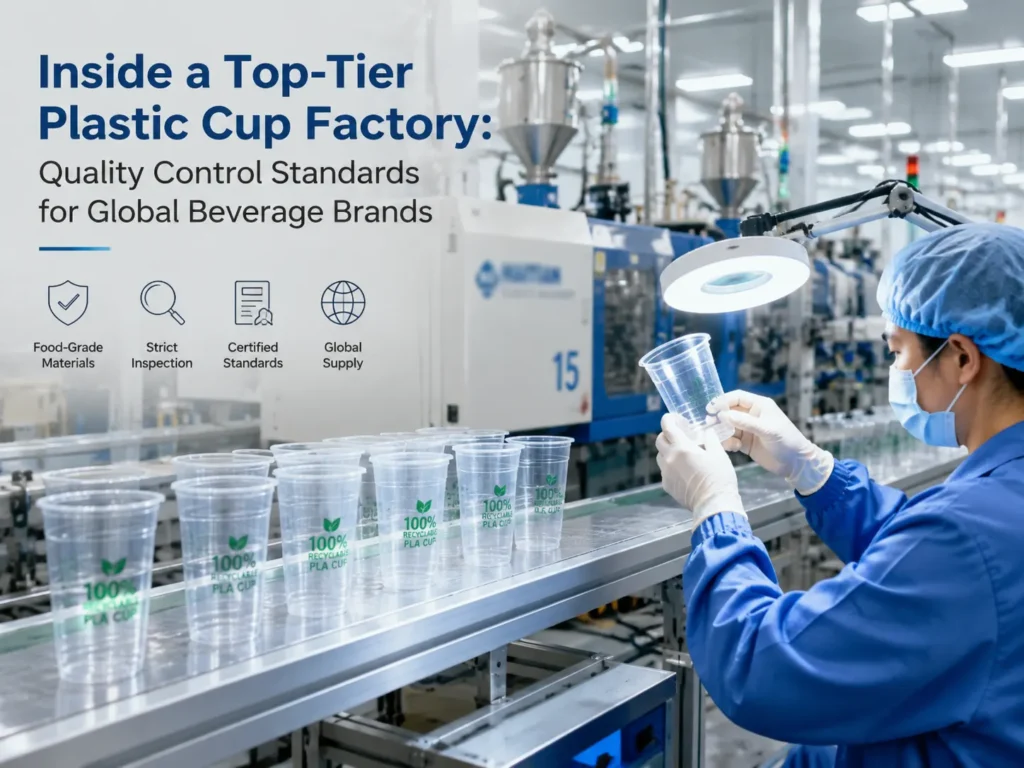
顶级塑料杯工厂内部: 质量控制
顶级塑料杯工厂内部: Quality Control Standards for Global Beverage Brands
For global beverage brands, 特许经营线索, and supply chain directors, the search for a reliable plastic cup factory is more than just a procurement task—it is a critical pillar of brand integrity and operational stability. In an era where consumer expectations for hygiene, 可持续性, and quality are at an all-time high, the choice of a manufacturing partner can make or break a product launch.
Whether you are scaling a multinational coffee chain or managing the procurement for a major retail brand, you know that the “plastic cup” is not just a container. It is a touchpoint for the consumer, a guardian of food safety, and a representative of your brand’s commitment to excellence. 然而, the global manufacturing landscape is vast, and not every plastic cup factory operates at the level required by top-tier beverage brands.
In this comprehensive guide, we go inside the operations of a leading manufacturer like 亚斯塔伊 (雅斯泰) to explore the rigorous quality control standards, modern automation, and food safety certifications that define a top-tier plastic cup factory.

1. The Real Cost of Low-End Manufacturing: Industry Pain Points
In the competitive beverage industry, purchasing managers often face the temptation of lower price points from unverified suppliers. 然而, the hidden costs of partnering with a sub-standard plastic cup factory can be devastating.
Inconsistent Product Quality
Low-end factories often utilize aging machinery and inconsistent raw material blends. This results in variations in cup clarity, thickness, and rim smoothness. For a brand, 一个 “leaky” cup or a lid that doesn’t fit securely is not just a minor annoyance—it is a fast track to negative customer reviews and brand erosion.
Hygiene and Contamination Risks
Food-grade packaging requires a sterile environment. Factories that lack dust-free workshops or proper central feeding systems risk introducing contaminants, such as dust, oils, or even biological hazards, into the production line. In a world of strict food safety regulations, one contamination incident can lead to massive recalls and legal liabilities.
Delivery Delays and Supply Chain Fragility
Small-scale or poorly managed factories often lack the production capacity to handle large, sudden spikes in demand. Without automated systems and efficient logistics, these suppliers frequently miss deadlines, causing stockouts at the retail level and disrupting the entire supply chain.
2. Setting the Gold Standard: Inside a Modern Plastic Cup Factory
A top-tier plastic cup factory differentiates itself through heavy investment in infrastructure. 在 亚斯塔伊, the focus is on creating a manufacturing ecosystem where human error is minimized and precision is maximized.
The Central Feeding System
In a modern plastic cup factory, the process begins with the raw material handling. Leading facilities utilize a closed-loop central feeding system. This system automatically transports plastic resins (such as PP, 宠物, or PLA) from silos to the extrusion lines. By automating this stage, the factory eliminates the risk of manual handling contamination and ensures that the resin stays pure and dry, which is essential for the clarity and strength of the final product.
High-Speed Thermoforming and Robotics
The heart of the plastic cup factory is the thermoforming hall. High-end manufacturers use imported, multi-station thermoforming machines that can produce tens of thousands of cups per hour with micron-level precision. 在亚斯塔, these machines are coupled with robotic arms that stack and pack the cups automatically. This “untouched by human hands” approach is the ultimate safeguard for hygiene.
Dust-Free Workshops (Class 100,000 Cleanrooms)
While many factories operate in standard industrial environments, a premium plastic cup factory operates within a certified dust-free workshop. These environments are strictly monitored for air pressure, temperature, and particulate matter. Workers must undergo rigorous sanitation protocols, including air showers and specialized protective gear, before entering the production floor. This level of control is non-negotiable for brands that export to markets with stringent health standards like the EU and North America.
3. Food Safety Standards in a Premium Plastic Cup Factory
For a purchasing manager, certifications are the shorthand for trust. A world-class plastic cup factory doesn’t just claim quality; it proves it through third-party audits and international standard compliance.
国际标准化组织 22000: The Benchmark for Food Safety
国际标准化组织 22000 is an international standard that specifies the requirements for a food safety management system. When a plastic cup factory like Yastai achieves ISO 22000 certification, it means they have implemented a comprehensive Hazard Analysis and Critical Control Point (HACCP) plan. Every stage—from raw material sourcing to final palletization—is mapped for potential risks and monitored to ensure those risks are mitigated.
美国食品药品监督管理局, BPI, and SGS Compliance
Beyond ISO standards, top factories ensure their products meet the specific regulatory requirements of their target markets.
- 美国食品药品监督管理局 (我们. 食品药品监督管理局): Ensures that the plastic resins and colorants used are safe for food contact.
- BPI (Biodegradable Products Institute): Essential for factories producing compostable PLA (聚乳酸) 杯子, certifying that the product will break down in commercial composting facilities.
- SGS/QS: Provides independent verification of material safety and manufacturing quality.
4. Efficiency vs. 质量: The Yastai Plastic Cup Factory Approach
One of the greatest challenges for a plastic cup factory is maintaining high precision at high speeds. Many factories sacrifice one for the other. 然而, Yastai has perfected the balance through 24+ years of industry expertise and a culture of continuous improvement.
High Output Without Compromise
With a 30,000-square-meter facility and dozens of high-speed production lines, Yastai is designed for scale. 然而, speed is never an excuse for poor quality. Every production line is equipped with optical inspection systems that use high-speed cameras to detect defects—such as specks, 裂缝, or deformities—in real-time. Defective units are automatically rejected, ensuring that only perfect cups reach the packaging stage.
The Role of R&D in Manufacturing
A leading plastic cup factory is also an innovator. Yastai invests heavily in R&D to develop thinner yet stronger cup walls, reducing material usage without compromising the structural integrity of the cup. This not only lowers costs for the client but also aligns with global sustainability goals by reducing the plastic footprint.
Customization and Branding
For franchise leads, the ability to customize is vital. A professional plastic cup factory offers advanced offset and flexographic printing services. Whether it’s a complex multi-color logo or a full-wrap design, Yastai’s printing department uses food-safe, low-migration inks that maintain their vibrancy even under cold or hot conditions.
5. The Supply Chain Director’s Checklist: Choosing the Right Partner
If you are currently evaluating a plastic cup factory, here are the critical factors to consider:
- 1. Capacity and Scalability: Can the factory handle a 50% increase in order volume during peak summer months?
- 2. Material Versatility: Do they offer PP (for heat resistance), 宠物 (for ultra-clarity), and eco-friendly PLA or RPET options?
- 3. Traceability: Can the factory provide a “paper trail” for every batch of raw materials used in your order?
- 4. Logistics Support: Does the factory have experience with international shipping, customs documentation, and door-to-door delivery?
Yastai excels in all these areas, acting not just as a supplier, but as a strategic partner that understands the nuances of global supply chain management.
6. 可持续发展: The Future of the Plastic Cup Factory
The narrative around plastic is changing, and a forward-thinking plastic cup factory must lead that change. Top-tier manufacturers are shifting toward circular economy models.
在亚斯塔, this means:
- Recycling Systems: All production scrap is granulated and reused in non-food applications or recycled back into the production loop where permitted.
- Eco-Friendly Materials: Offering a wide range of biodegradable PLA cups derived from renewable resources like corn starch.
- Energy Efficiency: Implementing solar power and energy-efficient cooling systems within the factory to reduce the carbon footprint of every cup produced.
结论: Partner with a Leader for Bulk Orders and Factory Tours
In the world of B2B beverage supplies, the quality of your packaging is a direct reflection of the quality of your brand. Partnering with a top-tier plastic cup factory 喜欢 亚斯塔伊 (雅斯泰) ensures that you never have to choose between cost-efficiency and food safety.
With over two decades of experience, state-of-the-art automation, and a suite of international certifications (国际标准化组织 22000, 国际标准化组织 9001, 美国食品药品监督管理局), Yastai is the preferred choice for global brands looking for reliability and excellence.
Ready to elevate your beverage packaging?
Visit ystpack.com to explore our full product range, from crystal-clear PET cups to sustainable PLA solutions. We welcome purchasing managers and supply chain directors to contact us for bulk pricing, custom samples, or to schedule a virtual or in-person factory tour.
Experience the precision of a world-class plastic cup factory—partner with Yastai today.