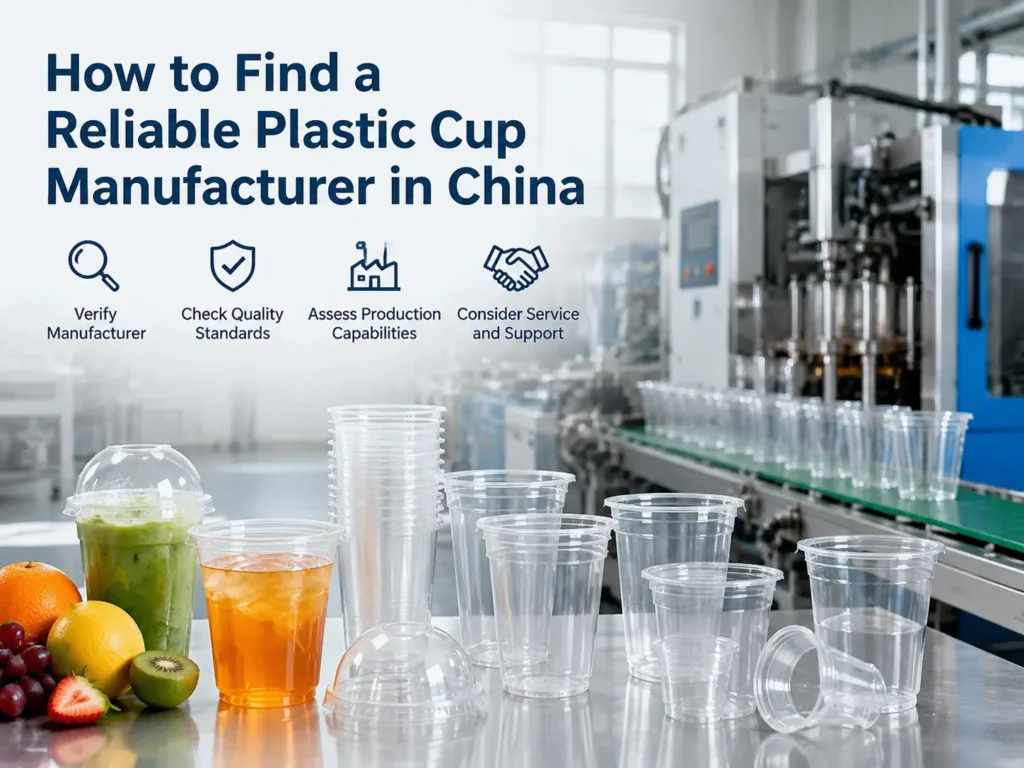
So finden Sie einen zuverlässigen Hersteller von Plastikbechern in Chin
Auswahl eines Herstellers von Plastikbechern: Ein Anruf, den Sie nie erhalten möchten
Ein Einkaufsleiter eines europäischen Lebensmittelhändlers erzählte mir, dass er acht Monate damit verbracht habe, einen Becherlieferanten zu finden. Er besuchte fünf Fabriken. Er hat die Preise ausgehandelt, bestätigte Proben, und eine Probebestellung aufgegeben. Vier Monate später, als seine Hochsaison im Sommer näher rückte, Der Lieferant teilte ihm mit, dass sich die Produktion um sechs Wochen verzögern würde, da er einen größeren Auftrag eines inländischen Kunden angenommen und dessen Priorität herabgestuft hatte.
Er hatte alles außer dem Kapazitätszusagesystem des Lieferanten überprüft.
Es ist einfach, in China einen Hersteller von Plastikbechern zu finden. Die Herausforderung besteht darin, einen Hersteller von Plastikbechern zu finden, der Ihre Lieferkette nicht dann gefährdet, wenn es darauf ankommt. Hier sind sieben Prüfungen, die Transaktionslieferanten von Fertigungspartnern unterscheiden.
Rote Flagge 1: Die Fabrik zeigt Ihnen nur den Ausstellungsraum
Viele Käufer fliegen nach China, eine Fabrik besuchen, Sehen Sie sich eine saubere Produktionsfläche an, und gehe davon aus, dass alles in Ordnung ist. Erfahrene Sourcing-Agenten kennen den Showroom-Rundgang auswendig: Es folgt einem ausgefeilten Weg, vorbei an der neuesten Ausrüstung, vermeidet das Rohstofflager, und überspringt das QC-Labor vollständig.
Was man stattdessen verlangen sollte: Eine nicht geschriebene Komplettlösung, die Folgendes enthält::
- Der Rohstoffannahmebereich: Ist es organisiert?, beschriftet, vor Feuchtigkeit geschützt? Eine unorganisierte Lagerung des Rohmaterials birgt das Risiko einer Kreuzkontamination und eine inkonsistente Becherqualität.
- Der Schimmellagerraum: Sind Formen katalogisiert?, geölt, und unter klimatisierten Bedingungen gelagert? Die Wartung der Formen ist ein führender Indikator für die allgemeine Fabrikdisziplin.
- Das QC-Labor: Existiert es?? Verfügt es über funktionierende Ausrüstung?? Eine Fabrik ohne eigenes Labor lagert Tests aus – was bedeutet, dass nicht jede Charge getestet wird.
- Produktionslinien mitten in der Schicht: Tragen die Arbeitnehmer die richtige PSA?? Werden Qualitätskontrollblätter in Echtzeit ausgefüllt?, oder leer da sitzen?
Der Härtetest: Bitten Sie um Einsicht in die Nichtkonformitätsberichte der Vorwoche. Jede Fabrik hat Mängel. Eine Fabrik, die Ihnen ihr Fehlerprotokoll zeigt und ihre Korrekturmaßnahmen erklärt, ist weitaus vertrauenswürdiger als eine Fabrik, die behauptet, dass sie „nie Qualitätsprobleme hat“.
Rote Flagge 2: Ihre Zertifikate sind abgelaufen oder unvollständig
Verpackungen mit Lebensmittelkontakt in regulierten Märkten erfordern spezielle Zertifizierungen. Ein Hersteller von Plastikbechern, der sagt „Wir haben alle Zertifikate“, ohne aktuelle Unterlagen vorzulegen, ist ein Risiko, das Sie sich nicht leisten können.
Wichtige Zertifizierungen zur unabhängigen Überprüfung:
| Zertifizierung | Was es abdeckt | So überprüfen Sie |
|---|---|---|
| BRCGS-Verpackung (A oder A+) | Umfassendes Lebensmittelsicherheitsmanagement für Verpackungshersteller | Überprüfen Sie die BRCGS-Verzeichnis online; Überprüfen Sie die Zertifikatsnummer und das Ablaufdatum |
| ISO 22000 | Managementsystem für Lebensmittelsicherheit | Fordern Sie das Zertifikat an, Erkundigen Sie sich dann bei der ausstellenden Stelle (SGS, TÜV, Intertek) |
| ISO 9001 | Allgemeines Qualitätsmanagement | Ähnlicher Verifizierungsprozess mit der ausstellenden Stelle |
| BPI kompostierbar (für PLA) | Industrielle Kompostierbarkeit für den US-Markt | Durchsuchen Sie das BPI-zertifizierte Produktverzeichnis |
| DIN CERTCO / IN 13432 (für PLA) | Industrielle Kompostierbarkeit für den EU-Markt | DIN CERTCO Zertifikatsdatenbank |
| GRS (Globaler Recycling-Standard) | Angaben zum recycelten Inhalt für RPET-Produkte | Textile Exchange-Verzeichnis |
| FDA 21 CFR | Einhaltung der Lebensmittelkontaktsubstanzen für die USA | Bestätigen Sie bestimmte Abschnitte, die im Zertifikat aufgeführt sind |
Kritische Unterscheidung: ISO 22000 befasst sich mit Managementsystemen für Lebensmittelsicherheit. BRCGS geht noch einen Schritt weiter und prüft die tatsächlichen Produktionsbedingungen vor Ort – erfahren Sie in unserem, warum dies wichtig ist Leitfaden zur Lebensmittelzertifizierung. Ein Lieferant mit der BRCGS-Bewertung A+ – der höchsten Note – hat ein unangekündigtes Audit bestanden, Das bedeutet, dass die Inspektoren ohne Vorwarnung erschienen und die vollständige Einhaltung festgestellt haben. Dies ist der Goldstandard bei Lebensmittelverpackungen.
Rote Flagge 3: Sie können ihre Rohstofflieferkette nicht erklären
Ein zuverlässiger Hersteller von Kunststoffbechern weiß, dass Qualität lange vor der Fabrik beginnt – beim Harzlieferanten. Stellen Sie diese drei Fragen:
- „Wer liefert Ihr PET/PLA/PP-Harz??” Akzeptable Antworten nennen bestimmte Hersteller: Indorama, Fernöstliches neues Jahrhundert, NatureWorks (für Ingeo PLA), TotalEnergies Corbion (für Luminy PLA). Vage Antworten wie „Wir beziehen unsere Produkte auf dem Markt“ bedeuten, dass sie Material zu Spotpreisen ohne Rückverfolgbarkeit kaufen.
- „Können Sie für jede Charge eine Materialbescheinigung vorlegen??” Lieferanten von Harzen in Lebensmittelqualität stellen Analysezertifikate aus (Echtheitszertifikat) pro Charge. Eine Fabrik, die nicht jede Produktionscharge einem bestimmten COA der Harzcharge zuordnen kann, weist eine Rückverfolgbarkeitslücke auf.
- „Wie lauten Ihre Richtlinien zu recycelten Inhalten??” Für Neuware, Bestätigen Sie, dass kein Post-Consumer-Recyclingmaterial in den Produktionsstrom gelangt, sofern nicht anders angegeben. Für RPET-Produkte, Bestätigen Sie die Quelle der recycelten Flocken und ob sie den Anforderungen der EFSA entsprechen (Europa) oder FDA (UNS) Anforderungen an den Lebensmittelkontakt.
Rote Flagge 4: Ihre Preise sind ungewöhnlich niedrig
Wenn ein Angebot eingeht 20-30% unter der Konkurrenz, Es ist kein Schnäppchen – es ist ein Signal, weitere Nachforschungen anzustellen. Kostendruck kann bei einem Hersteller von Plastikbechern nicht allein durch den Arbeitsaufwand entstehen; es muss von irgendwoher kommen.
Wo sich normalerweise unrealistisch niedrige Preise verbergen:
- Dünnere Wandstärke: Die Tasse sieht gleich aus, ist aber gebraucht 15-20% weniger Material. Ergebnis: Tassen, die bei mäßigem Griffdruck zusammenfallen oder am Rand unter der Krafteinwirkung des Deckels platzen.
- Minderwertiges Harz: Ersetzen Sie die erstklassige Qualität HAUSTIER mit nicht spezifikationsgerechtem oder recyceltem Material, das nicht für den Kontakt mit Lebensmitteln zertifiziert ist.
- Keine Tests durch Dritte: Die Fabrik führt die angeblichen Zertifizierungen nicht tatsächlich durch. Die hinterlegten Zertifikate gehören möglicherweise einem anderen Unternehmen oder sind abgelaufen.
- Keine Verpackung in Exportqualität: Die Becher werden in Großpackungen ohne inneren Kartonschutz verpackt, Mit Abrieb am Ziel ankommen, Verformung, oder Kontamination.
Angemessene Preis-Benchmarks: Der Arbeitsaufwand in der chinesischen Tassenherstellung beträgt ungefähr 10 % 8-12% der Stückkosten. Rohstoff ist 55-65%. Wenn ein Angebot den Markt um mehr als den Arbeitsanteil unterbietet, Der Unterschied liegt in der Materialqualität – was jeden Käufer von Gastronomiedienstleistungen beunruhigen sollte.
Rote Flagge 5: Sie verfügen nicht über einen dokumentierten Kapazitätsplanungsprozess
Die anderen Kunden Ihres Lieferanten wirken sich direkt auf Ihre Lieferung aus. Eine Fabrik läuft 95% Wenn Sie bei der Bestellung eine Kapazität angeben, ist kein Platz für Fehler, und Feiertage, Maschinenausfälle, oder größere Aufträge von anderen Kunden werden Ihre Produktion verdrängen.
Fragen, die man stellen sollte:
- „Wie hoch ist Ihre aktuelle Kapazitätsauslastung??" Über 85%, Das Risiko steigt stark an.
- „Wie viele Produktionslinien sind für die Herstellung von Exportbechern vorgesehen??„Einige Leitungen sind möglicherweise für inländische Marktspezifikationen konfiguriert, die nicht den EU-/US-Anforderungen entsprechen.
- „Was ist Ihre Hauptsaison?, und wie verwalten Sie die Kapazität in diesem Zeitraum??„Die chinesische Inlandsnachfrage steigt rund um wichtige Feiertage und die Getränkesaison im Sommer stark an – planen Sie Ihre Bestellungen entsprechend.
- „Zeigen Sie mir Ihr Produktionsplanungssystem.“ Selbst ein Whiteboard mit klarer Zuordnung ist besser als „Der Produktionsleiter erledigt das im Kopf.“
Vertragsschutz: Fügen Sie eine Kapazitätszusageklausel hinzu, die angibt, dass Ihr Auftrag eine bestimmte Produktionszeit erhält, keine „Best Effort“-Planung. Fügen Sie Vertragsstrafen für Verzögerungen hinzu, die eine vereinbarte Nachfrist überschreiten.
Rote Flagge 6: Sie haben keine Erfahrung mit den Vorschriften Ihres Zielmarktes
Der Verkauf von Tassen in Deutschland unterscheidet sich vom Verkauf in Saudi-Arabien, was sich vom Verkauf in Kalifornien unterscheidet. Jede Gerichtsbarkeit hat spezifische Anforderungen an Lebensmittelkontaktmaterialien, Beschriftung, und Umweltansprüche. Ein Lieferant, der alle Exportaufträge gleich behandelt, wird irgendwann eine Zollsperre oder einen Verstoß gegen Vorschriften auslösen – für ihn gilt die gleiche Strenge Qualitätskontrolle beim Logodruck.
Marktspezifische Anforderungen zur Überprüfung:
| Markt | Schlüsselverordnung | Spezifische Anforderungen |
|---|---|---|
| europäische Union | EU 10/2011 (Kunststoffe FCM) | Allgemeine Migrationsgrenzen, spezifische Migrationsgrenzwerte für zugelassene Stoffe, Konformitätserklärung (DoC) pro Charge erforderlich |
| Vereinigte Staaten | FDA 21 CFR 177.1630 (HAUSTIER) | Lebensmittelkontaktmeldung oder GRAS-Bestimmung, Kalifornischer Vorschlag 65 Compliance für Druckfarben |
| Vereinigtes Königreich | UK Plastics FCM (nach dem Brexit) | UK DoC erforderlich, Liste der im Vereinigten Königreich zugelassenen Stoffe |
| Australien/Neuseeland | ALS 2070 | Spezifische Migrationstests gemäß australischen Standards |
| Naher Osten | GSO / SASO-Standard | Manchmal ist für PLA eine Halal-Zertifizierung erforderlich (pflanzliche Materialien), besondere Kennzeichnungsanforderungen |
Bitten Sie den Lieferanten, ein Muster-DoC bereitzustellen, das Ihren Zielmarktanforderungen entspricht. Wenn sie fragen: „Was ist ein DoC?“,„Das ist deine Antwort.
Rote Flagge 7: Ihre Kommunikation ist reaktiv, Nicht proaktiv
Dies ist der am schwersten zu quantifizierende Warnhinweis, aber oft auch der aussagekräftigste Hinweis auf eine schwierige Lieferantenbeziehung. Während der Bemusterungs- und Verhandlungsphase, Beobachten Sie, wie der Lieferant kommuniziert:
Grüne Flaggen:
- Beantwortet technische Fragen mit Daten, keine Zusicherungen
- Zeigt potenzielle Probleme proaktiv an (Formänderungszeit, Urlaubsplanung, Materialvorlaufzeiten)
- Sendet Produktionsupdates unaufgefordert
- Verfügt über englischsprachiges technisches Personal, das Spezifikationen direkt besprechen kann, nicht nur Handelsvertreter
Rote Fahnen:
- Jede Antwort ist „kein Problem“ ohne Einzelheiten
- Nach der Auftragsbestätigung kommt es immer häufiger zu Kommunikationsverzögerungen
- Technische Fragen werden immer mit tagelanger Bearbeitungszeit an „den Ingenieur“ weitergeleitet
- Dokumentation kann nicht bereitgestellt werden (Echtheitszertifikate, Testberichte, Zertifizierungen) innerhalb 48 Stunden der Anfrage
Qualifikationscheckliste für Hersteller von Kunststoffbechern: Bewerten Sie Ihren Lieferanten
Kombinieren Sie die sieben oben genannten Prüfungen zu einer bewerteten Bewertung für jeden potenziellen Lieferanten:
| Überprüfen | Gewicht | Bewertungskriterien |
|---|---|---|
| Fabriktransparenz | 20% | Vollständiger Zugriff ohne Skript = 10; Auf Ausstellungsraum beschränkt = 3 |
| Zertifizierungsstatus | 25% | BRC A+ mit aktuellen Dokumenten = 10; Keine Zertifikate = 0 |
| Rückverfolgbarkeit der Rohstoffe | 15% | COA-Zuordnung auf Chargenebene = 10; Keine Rückverfolgbarkeit = 0 |
| Angemessenheit der Preisgestaltung | 10% | Im Marktbereich = 10; >25% unten = 2 |
| Kapazitätsmanagement | 15% | Dokumentiertes System mit Kapazitätsdaten = 10; Nur verbal = 2 |
| Regulatorisches Wissen | 10% | Kann DoC = für den Zielmarkt erstellen 10; Unbekannt = 1 |
| Kommunikationsqualität | 5% | Proaktiv + technisch = 10; Reaktiv + vage = 2 |
Eine Fabrik, die unten punktet 60 Bei dieser Einschätzung handelt es sich um ein unkontrolliertes Risiko. Eine Punktzahl von 80+ bezeichnet einen Lieferanten, mit dem Sie eine mehrjährige Beschaffungsbeziehung aufbauen können.
Bei Yasitai, Wir agieren mit vollständiger Transparenz in allen sieben Dimensionen – angefangen bei unserer BRC A+-Zertifizierung (unangekündigte Prüfungsnote) Dies ist auf unsere 25-jährige Erfolgsgeschichte bei der konsequenten Exportlieferung zurückzuführen. Wir empfehlen jedoch jedem Käufer, diese Checkliste anzuwenden, unabhängig davon, wen er bewertet. Ein Hersteller von Plastikbechern, der Ihre Prüfung willkommen heißt, ist eine Fabrik, die nichts zu verbergen hat. Entdecken Sie unsere Großhandels-FAQs oder Erfahren Sie mehr über unsere 25-jährige Fertigungstradition.