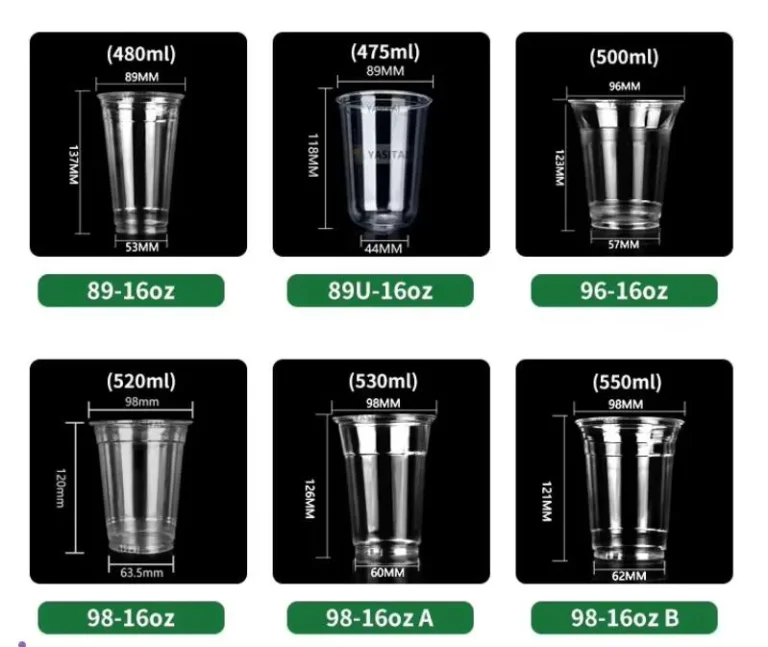
¿Son realmente compostables los vasos fríos de PLA?? Entendiendo EN1
¿Son realmente compostables los vasos fríos de PLA??
Para importadores internacionales de envases y cadenas de servicios alimentarios., cambiando a PLA (Ácido poliláctico) tazas es un gran paso hacia la sostenibilidad. Sin embargo, La introducción de estos productos en mercados como la Unión Europea o América del Norte conlleva un estricto escrutinio regulatorio.. Los funcionarios de aduanas y las agencias ambientales locales preguntan con frecuencia: ¿Este embalaje es realmente compostable?, ¿O es simplemente otra forma de bioplástico que deja microplásticos??
Para pasar la aduana sin problemas y proteger su marca de “lavado verde” sanciones, debes comprender la realidad técnica de la degradación del PLA y los estándares internacionales que la rigen.: EN 13432 y ASTM D6400.
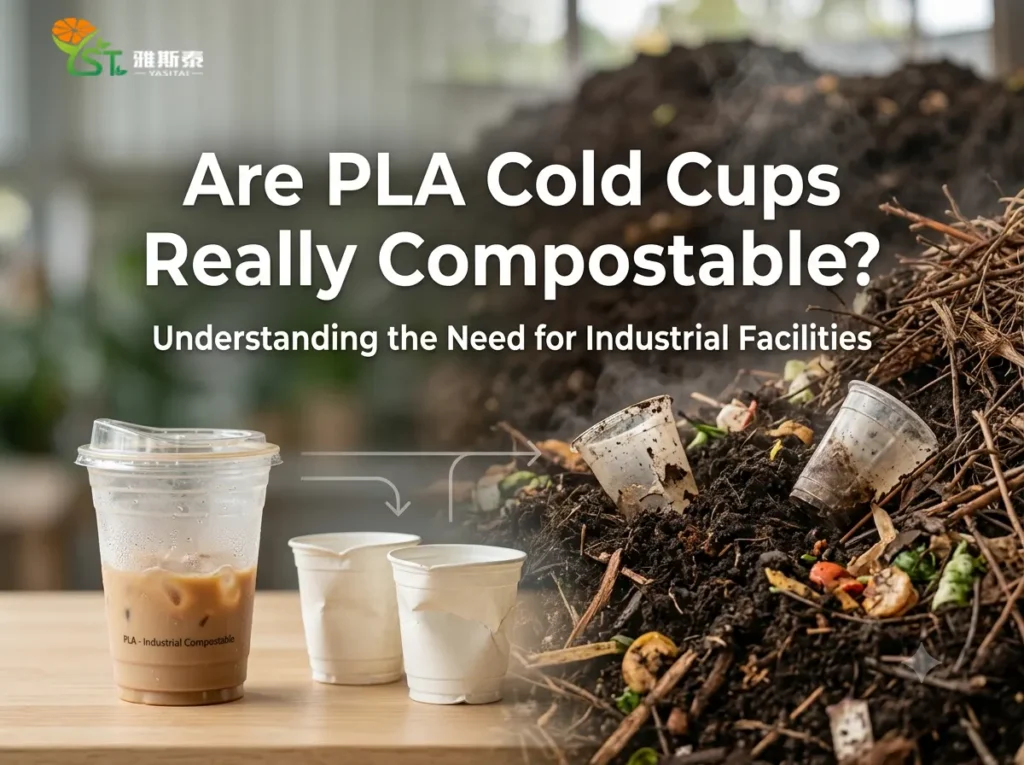
La ciencia: “Biodegradable” vs. “Compostables Industriales”
Uno de los mayores conceptos erróneos entre los compradores B2B es que un vaso de PLA simplemente desaparecerá si se deja en un vertedero o en el océano.. No lo hará.
El PLA se deriva de almidones vegetales. (como el maíz), haciéndolo de base biológica, pero su estructura química requiere condiciones ambientales específicas para descomponerse por completo..
- Compostaje doméstico/vertederos: En pilas de abono de suelo estándar o de jardín, las temperaturas rara vez alcanzan el umbral requerido para romper las cadenas de polímero del PLA. En estos ambientes, la degradación puede tardar años.
- Instalaciones de compostaje industrial: Aquí es donde el PLA funciona según lo diseñado.. Estos entornos gestionados mantienen una temperatura constante de 58°C a 60°C (136°F a 140°F), alta humedad relativa, y rica actividad microbiana. Bajo estos parámetros precisos, El PLA se descompone en agua, $CO_2$, y biomasa rica en nutrientes, sin dejar absolutamente ningún residuo tóxico.
Los dos estándares de oro del compostaje
Para demostrarlo en la aduana, supermercados, y consumidores que sus tazas importadas se degradarán completamente en un sistema industrial, Su fabricante debe proporcionar informes de prueba que coincidan con dos estándares principales.:
                  ┌────────────────────────────────────────┐
                  │      Industrial Compost Standards      │
                  └───────────────────┬────────────────────┘
                                      │
                   ┌──────────────────┴──────────────────┐
                   ▼                                     ▼
       ┌───────────────────────┐             ┌───────────────────────┐
       │   EN 13432 (Europe)   │             │   ASTM D6400 (USA)    │
       └───────────────────────┘             └───────────────────────┘
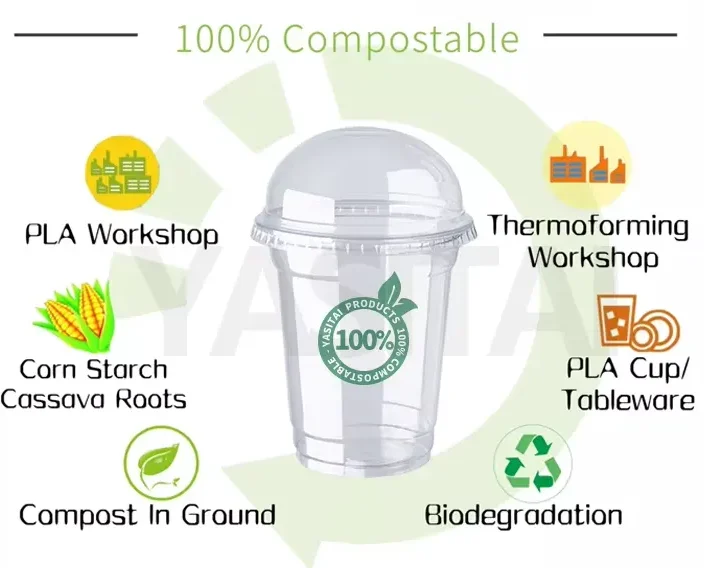
1. EN 13432 (Estándar europeo)
Esta norma europea armonizada establece los requisitos para los envases valorizables mediante compostaje y biodegradación.. Para que un vaso de PLA apruebe ES 13432, debe someterse a pruebas de laboratorio para demostrar cuatro criterios específicos:
- Biodegradación: Al menos 90% del carbono orgánico debe convertirse a $CO_2$ dentro de 6 meses.
- Desintegración: Después 12 semanas de compostaje, no más que 10% del peso seco original de la copa puede no pasar a través de un 2milímetros malla de tamiz.
- Ecotoxicidad: El compost resultante se prueba en plantas. (como cebada de verano y berros). La tasa de crecimiento de las plantas debe exceder 90% en comparación con el compost de control, Garantizar que no haya metales pesados ni residuos químicos que dañen el suelo..
- Composición química: Se ponen límites a los metales pesados (como plomo, Mercurio, y cadmio) y sólidos volátiles permitidos en el material de partida..
2. ASTM D6400 (Estándar americano)
Esta es la norma equivalente emitida por la Sociedad Estadounidense de Pruebas y Materiales.. Dicta las especificaciones para los plásticos diseñados para ser compostados en instalaciones municipales e industriales.
- Sus parámetros reflejan fielmente EN 13432, requiriendo 90% conversión al dióxido de carbono dentro 180 días, Asegurar que el plástico se degrade a un ritmo comparable al de los materiales compostables conocidos. (como papel) y no disminuye el valor o la seguridad del compost final.
Lista de verificación de adquisiciones: Cómo verificar el cumplimiento del proveedor
Al adquirir vasos fríos de PLA a granel de China, No confíes en un simple texto impreso en la taza que dice “100% Biodegradable.” Debe solicitar documentación técnica comprobable a su proveedor.
- Busque logotipos de certificación de terceros: Los productos de PLA compostables genuinos están certificados por organismos externos reconocidos.. Solicite a su proveedor certificados de TUV AUSTRIA (Ok compost industrial) para Europa, o el BPI (Instituto de Productos Biodegradables) para américa del norte.
- Verificar el organismo de prueba: Asegúrese de que el informe de prueba provenga de laboratorios de pruebas internacionales acreditados, como SGS, TUV, o DIN CERTCO.
- Verificar coincidencia de artículos: Asegúrese de que el certificado cubra explícitamente el grado del material específico y el grosor de los vasos y tapas que está comprando., ya que las secciones de plástico más gruesas tardan más en descomponerse.
Garantía de Cumplimiento en YSTPACK
En YSTPACK, Fabricamos nuestra línea ecológica utilizando puro, Resinas PLA de alta calidad que cumplen plenamente con ambos. EN 13432 y ASTM D6400 marcos.
- Nuestros vasos fríos de PLA y sus tapas planas/domo a juego cuentan con certificaciones válidas, eliminar los riesgos del despacho de aduanas en los principales puertos mundiales.
- Utilizamos cero aditivos plásticos tradicionales., Garantizar que el embalaje de su marca se convierta completamente en materia orgánica sin generar microplásticos..
- Cada lote se somete a estrictas pruebas estructurales y dimensionales internas., Garantizando que nuestros vasos compostables mantengan la rigidez exacta y las tolerancias de tapa de ajuste a presión de las alternativas tradicionales de PET..
Necesita una copia de nuestros certificados de cumplimiento para su auditoría ambiental local?
[Póngase en contacto con el equipo de cumplimiento de YSTPACK hoy] para recibir informes completos de pruebas de SGS y solicitar precios directos de fábrica para su embalaje ecológico impreso personalizado.