Comment importer des gobelets en plastique de Chine: Sou B2B complet
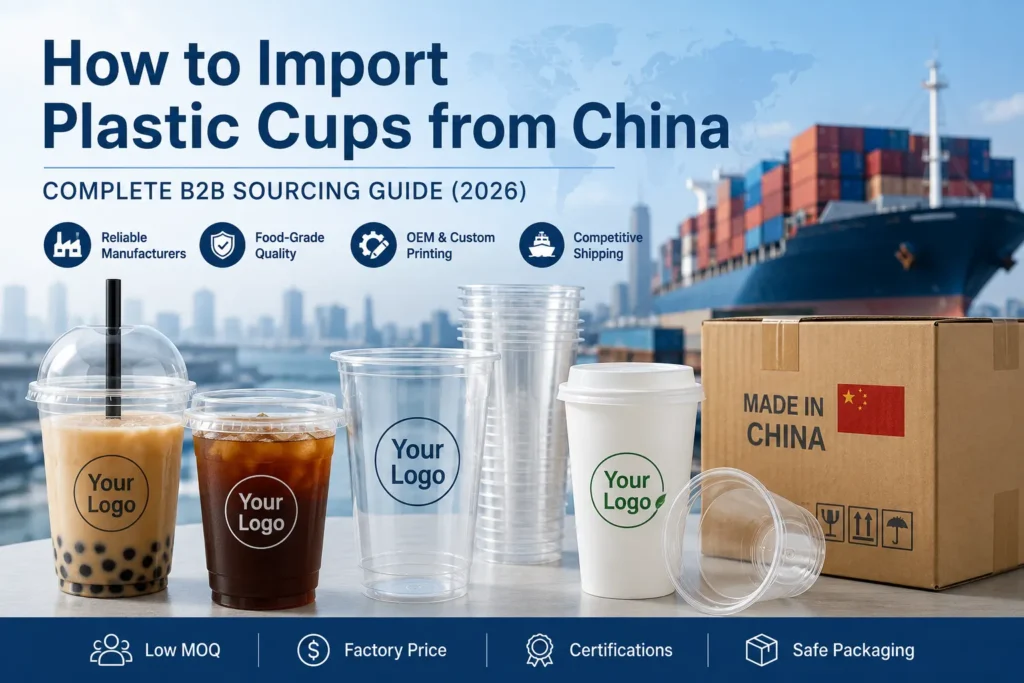
La Chine reste le plus grand centre mondial de fabrication de gobelets en plastique jetables, approvisionner les grossistes, chaînes de restaurants, marques de café, boutiques de thé à bulles, supermarchés, et distributeurs d'emballages dans le monde entier.
Pour les acheteurs internationaux, l'importation de gobelets en plastique de Chine offre des avantages de coût significatifs et des opportunités flexibles de personnalisation OEM. Cependant, un sourcing réussi ne consiste pas simplement à trouver le prix le plus bas. Sélection des matériaux, conformité alimentaire, qualité d'impression, délais de production, et l'efficacité des expéditions ont tous un impact direct sur votre rentabilité.
Ce guide explique comment importer professionnellement des gobelets en plastique de Chine tout en évitant les erreurs courantes d'approvisionnement..
Types de Gobelets en plastique Couramment importé de Chine
Avant de choisir un fournisseur, les acheteurs doivent comprendre les différents types de gobelets en plastique disponibles sur le marché.
Gobelets en plastique PET
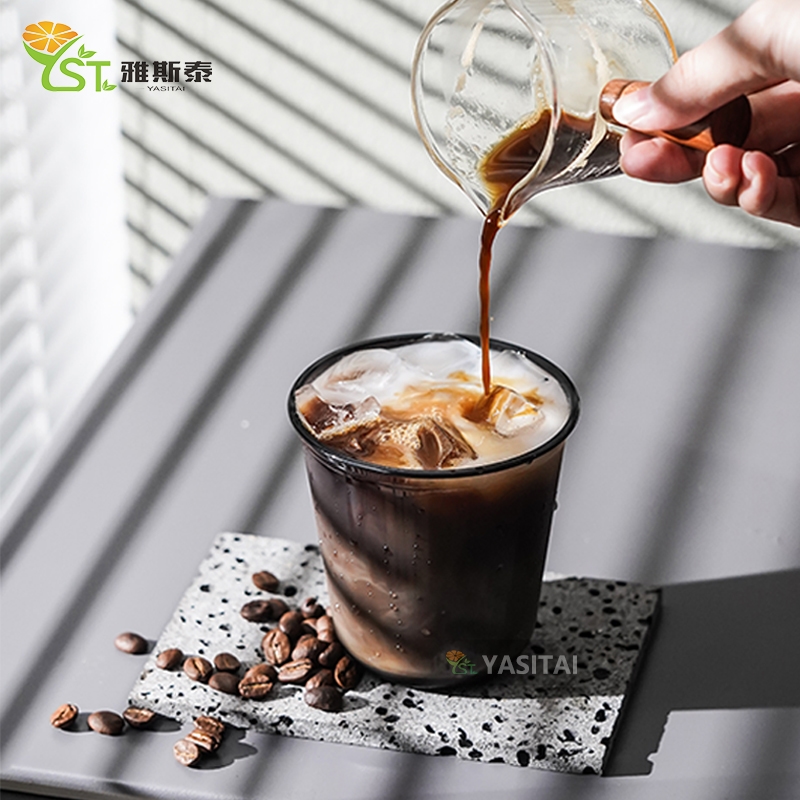
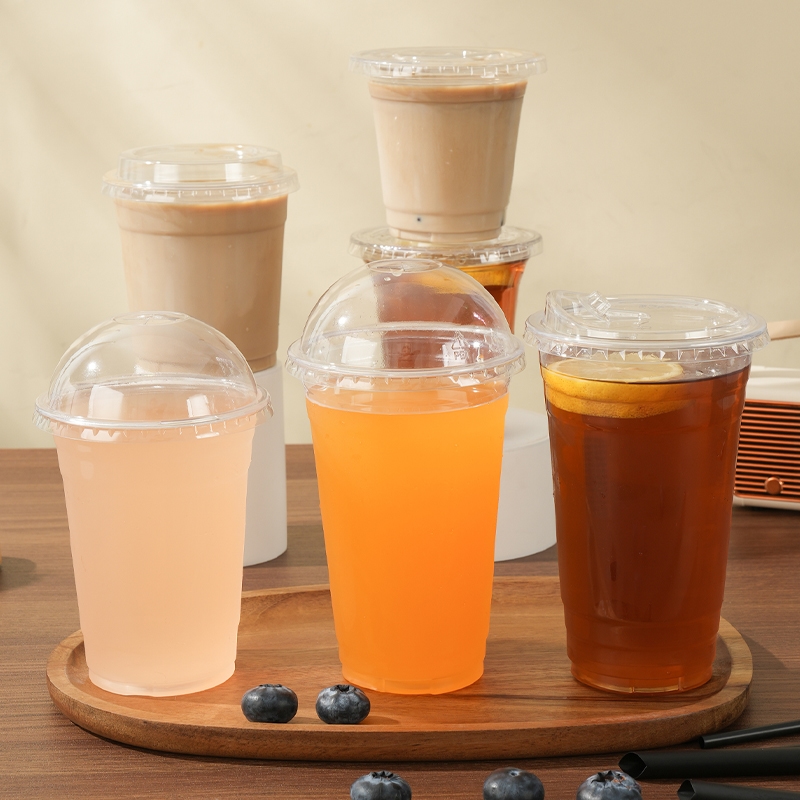
Les gobelets en PET sont l'option la plus largement utilisée pour les boissons froides.
Ils sont couramment utilisés pour:
- Thé aux bulles
- Smoothies
- Café glacé
- Boissons à base de jus
- Thé aux fruits
Avantages des gobelets PET
- Haute transparence
- Apparence haut de gamme
- Léger
- Bonne résistance aux fissures
- Excellent pour les boissons froides
Tailles courantes
- 12oz
- 16oz
- 20oz
- 24oz
Les gobelets en PET sont particulièrement populaires parmi les marques de bubble tea et les chaînes de cafés car ils améliorent la présentation des produits..
Cependant, Les gobelets en PET ne conviennent pas aux boissons à haute température.
Gobelets en plastique PP
PP (Polypropylène) les gobelets sont plus résistants à la chaleur que les gobelets en PET.
Ils sont couramment utilisés pour:
- Boissons chaudes
- je suis du lait
- Café chaud
- Boissons instantanées
Avantages des gobelets PP
- Meilleure résistance à la chaleur
- Coût matériel inférieur
- Structure résistante
- Compatible micro-ondes dans certaines applications
Comparé aux gobelets en PET, Les gobelets en PP ont généralement une transparence moindre mais une meilleure tolérance à la température.
Gobelets biodégradables en PLA
Alors que les réglementations environnementales deviennent plus strictes en Europe et en Amérique du Nord, Les gobelets PLA gagnent en popularité.
Les gobelets en PLA sont fabriqués à partir de matériaux d'origine végétale et sont commercialisés comme des alternatives écologiques aux plastiques traditionnels..
Acheteurs communs
- Marques de cafés éco-responsables
- Distributeurs d'emballages durables
- Importateurs européens
- Chaînes de boissons haut de gamme
Considération importante
Les gobelets en PLA ont généralement:
- Coûts de matériaux plus élevés
- Résistance thermique inférieure
- Des exigences de stockage plus strictes
Cependant, ils s'alignent sur les tendances mondiales en matière d'ESG et de développement durable.
Gobelets moulés par injection ou thermoformés
De nombreux acheteurs étrangers négligent le processus de fabrication, mais cela affecte directement la qualité et le coût du produit.
Gobelets thermoformés
Caractéristiques:
- Coût de production inférieur
- Léger
- Convient pour une utilisation jetable en grand volume
Commun dans:
- Industrie du thé aux perles
- Emballage de restauration rapide
Bonnets moulés par injection
Caractéristiques:
- Des murs plus épais
- Résistance supérieure
- Meilleure sensation premium
Commun dans:
- Gobelets réutilisables
- Emballage alimentaire haut de gamme
Les bonnets moulés par injection sont plus durables mais généralement plus chers.
Pourquoi Importer des gobelets en plastique de Chine?
La Chine domine l’industrie mondiale des gobelets jetables pour plusieurs raisons au-delà de la simple tarification.
Rentabilité
Les constructeurs chinois profitent:
- Chaînes d’approvisionnement en matières premières à grande échelle
- Lignes de production automatisées
- Infrastructure de fabrication mature
- Coûts de production unitaires réduits
Cela permet aux acheteurs étrangers de rester compétitifs sur des marchés très sensibles aux prix..
Forte capacité de personnalisation OEM
La plupart des usines chinoises soutiennent:
- Impression de logo personnalisé
- Tailles de bonnets personnalisées
- Personnalisation des couleurs
- Marquage en relief
- Couvercles et pailles assortis
- Emballage prêt pour le commerce de détail
Ceci est particulièrement utile pour les marques de boissons de marque privée et les grossistes..
Grande capacité de production
Les usines expérimentées peuvent gérer:
- Commandes à l'échelle du conteneur
- Production de haute saison
- Projets d'exportation multi-pays
Pour les distributeurs en pleine croissance, une capacité de production stable est essentielle.
Chaîne d’approvisionnement complète de l’emballage
L’écosystème chinois de l’emballage est hautement intégré.
De nombreux fournisseurs peuvent fournir:
- Tasses
- Couvercles
- Pailles
- Film d'étanchéité
- Plateaux de transport
- Cartons d'emballage
Cela simplifie la gestion des approvisionnements et réduit la complexité des achats..
Comment choisir un fabricant de gobelets en plastique fiable
Choisir le bon fournisseur est plus important que trouver le prix le moins cher.
Vérifiez les certifications de qualité alimentaire
Pour les marchés internationaux, le respect de la sécurité alimentaire est essentiel.
Les certifications courantes incluent:
- FDA
- GV
- Tests de contact alimentaire dans l'UE
- LFGB
Les acheteurs doivent toujours demander des rapports de tests mis à jour avant de passer des commandes groupées.
Évaluer la qualité d'impression
La qualité d’impression personnalisée affecte directement l’image de marque.
Les problèmes courants incluent:
- Disparition du logo
- Impression mal alignée
- Incohérence des couleurs
- Écaillage de l'encre
Demander des échantillons physiques avant d’approuver la production.
Confirmer la capacité de production
Demandez aux fournisseurs:
- Production quotidienne
- Nombre de lignes de production
- Délai pendant les hautes saisons
- Niveau d'automatisation
Les usines dont la production est instable entraînent souvent des retards de livraison.
Test de compatibilité des gobelets et des couvercles
L'un des problèmes les plus courants dans l'industrie est un mauvais ajustement du couvercle..
Avant la production de masse, les acheteurs devraient tester:
- Résistance aux fuites
- Étanchéité du couvercle
- Empilabilité
- Déformation de la cupule
Ceci est particulièrement important pour les entreprises de boissons à emporter.
Comprendre le MOQ (Quantité de commande minimale)
La fabrication de gobelets en plastique nécessite généralement des MOQ relativement élevés.
Exemples typiques:
| Type de produit | MOQ typique |
|---|---|
| Gobelets PET transparents | 50,000 pièces |
| Tasses imprimées | 100,000 pièces |
| Produits de moules personnalisés | Plus haut |
Pourquoi les MOQ sont-ils élevés?
Parce que les usines doivent rendre compte:
- Configuration de la plaque d'impression
- Calibrage des machines
- Préparation du matériel
- Coûts de changement de ligne de production
Les très petites commandes ne sont généralement pas rentables pour les fabricants.
Facteurs de prix des gobelets en plastique
Les prix des gobelets en plastique varient considérablement en fonction de plusieurs facteurs.
Type de matériau
Les gobelets en PLA sont généralement plus chers que les gobelets en PET ou en PP.
Taille et épaisseur du bonnet
Des tasses plus grandes et plus épaisses nécessitent plus de matière première.
Exigences d'impression
Plus de couleurs d'impression augmentent les coûts de production.
Les finitions spéciales telles que l'impression mate ou les effets UV font également grimper les prix..
Méthode d'emballage
L'emballage de qualité exportation peut inclure:
- Cartons à double paroi
- Doublures de protection
- Emballage de vente au détail personnalisé
Ceux-ci augmentent la sécurité des expéditions mais affectent également le coût global.
Frais de transport
Les gobelets en plastique sont légers mais occupent un grand volume d'expédition.
Cela rend l’efficacité du fret extrêmement importante.
Les gobelets à paroi mince peuvent réduire le coût unitaire, mais ils peuvent augmenter le risque de déformation lors du transport international.
OEM & Gobelets en plastique de marque privée
La personnalisation OEM est l’un des plus grands avantages de l’approvisionnement en Chine.
De nombreux acheteurs utilisent des gobelets personnalisés pour renforcer la reconnaissance de la marque.
Options OEM courantes
Les fabricants peuvent généralement fournir:
- Impression de logo personnalisé
- Conceptions promotionnelles saisonnières
- Gobelets transparents ou colorés
- Impression de codes QR
- Emballage multilingue
Processus OEM standard
Un flux de travail de personnalisation typique comprend:
- Envoi d'une illustration du logo
- Confirmation des dimensions de la tasse
- Approuver les maquettes numériques
- Production d'échantillons
- Production de masse
- Confirmation de l'emballage d'exportation
Les usines professionnelles fournissent normalement des services d'assistance aux œuvres d'art et d'échantillonnage..
Expédition de gobelets en plastique à l’international
L’expédition est l’un des facteurs de coût les plus négligés lors de l’importation de gobelets en plastique.
Fret maritime vs fret aérien
Le fret maritime est la méthode la plus courante car les gobelets en plastique constituent une cargaison volumineuse..
Avantages du fret maritime
- Coût inférieur
- Convient aux grosses commandes
- Meilleure utilisation des conteneurs
Avantages du fret aérien
- Livraison plus rapide
- Convient pour un réapprovisionnement urgent
Cependant, le fret aérien est souvent trop cher pour les expéditions de gobelets en gros volume.
Optimisation des conteneurs
Les gobelets en plastique sont considérés:
Cargaison de faible valeur mais de volume élevé.
Un chargement efficace des conteneurs est essentiel.
Les fournisseurs expérimentés optimisent:
- Dimensions des cartons
- Conception de nidification de tasse
- Chargement de palettes
- Utilisation de l'espace des conteneurs
Une mauvaise efficacité de chargement peut augmenter considérablement les coûts logistiques.
Droits d'importation et codes SH
Différents pays appliquent des droits d'importation différents pour les produits en plastique jetables.
Les acheteurs doivent confirmer:
- Codes SH
- Exigences douanières
- Règlements antidumping
- Lois locales sur l'emballage
Travailler avec des transitaires expérimentés est fortement recommandé.
Erreurs courantes lors de l'importation de gobelets en plastique de Chine
De nombreux problèmes d'approvisionnement proviennent d'erreurs évitables.
Choisir des fournisseurs extrêmement bon marché
Des prix extrêmement bas entraînent souvent:
- Casser des tasses
- Matériaux fins
- Mauvaise impression
- Expéditions retardées
- Emballage faible
En sourcing B2B, une qualité instable entraîne généralement des coûts plus élevés à long terme.
Ignorer la conformité en matière de sécurité alimentaire
Certains fournisseurs peuvent ne pas fournir de certifications de qualité alimentaire valides.
Cela peut créer de sérieux risques d’importation sur les marchés américain et européen..
Commande sans test de couvercle
L'inadéquation des gobelets et des couvercles est un problème courant dans l'industrie des boissons.
Testez toujours les échantillons réellement assemblés avant la production.
Ignorer la solidité des emballages d’exportation
La compression des expéditions internationales peut endommager les cartons fragiles.
Un emballage d’exportation professionnel est essentiel pour les expéditions de gros volumes.
FAQ
Les gobelets en plastique chinois sont-ils sûrs pour les aliments ??
Oui, de nombreux fabricants chinois produisent des gobelets en plastique de qualité alimentaire conformes aux normes de la FDA et de l'UE. Les acheteurs doivent demander des rapports de certification avant de commander.
Quel est le MOQ pour les gobelets en plastique imprimés personnalisés?
La plupart des usines ont besoin de 50 000 à 100 000 pièces en fonction de la taille des gobelets et des exigences d'impression..
Combien de temps prend la production?
Le délai de production typique varie de 15 à 35 jours en fonction de la quantité commandée et de la complexité de la personnalisation.
Gobelets PET ou PP: ce qui est mieux?
Les gobelets en PET conviennent mieux aux boissons froides et aux présentations haut de gamme, tandis que les gobelets en PP offrent une meilleure résistance à la chaleur et un coût inférieur.
Les fournisseurs chinois peuvent-ils fournir des couvercles et des pailles assortis ??
Oui. De nombreux fournisseurs proposent des solutions intégrées d'emballage de boissons, notamment des couvercles., pailles, et film d'étanchéité.
Le fret maritime est-il meilleur pour importer des gobelets en plastique?
Dans la plupart des cas, Oui. Les gobelets en plastique occupent un grand volume d'expédition, rendre le fret maritime plus économique.
Conclusion
La Chine continue de dominer la chaîne d’approvisionnement mondiale des gobelets en plastique jetables en raison de son échelle de fabrication, Flexibilité OEM, et rentabilité.
Cependant, le succès d’une importation ne dépend pas uniquement du prix. Les acheteurs doivent évaluer soigneusement les fournisseurs, vérifier la conformité alimentaire, tester la qualité du produit, et optimiser la stratégie d'expédition.
Pour les grossistes, marques de boissons, et distributeurs d'emballages, Travailler avec un fabricant chinois expérimenté peut améliorer considérablement à la fois la stabilité de l'approvisionnement et la rentabilité à long terme..