Sushi Container Supplier Selection Guide: 7 Checks for
How to Choose a Sushi Container Supplier for Real Service Conditions
If a sushi delivery order arrives with a shifted roll, a cloudy lid, or a tray that flexes during stacking, the packaging problem quickly becomes a food-quality and brand problem. A reliable sushi container supplier must do more than show attractive product photos. You need repeatable dimensions, dependable lid engagement, food-contact documentation, stable output, and a sampling process that reflects the way your kitchens and delivery partners actually work.
We evaluate sushi packaging from the operating brief outward: food geometry, condensation, stacking, transport distance, display requirements, and purchase volume. Yasitai manufactures sushi boxes, food containers, trays, PET cups, PLA cups, and RPET cups, so we can build a packaging conversation around the complete foodservice range rather than a single catalogue item.
What Should a Sushi Container Supplier Prove Before Sampling?
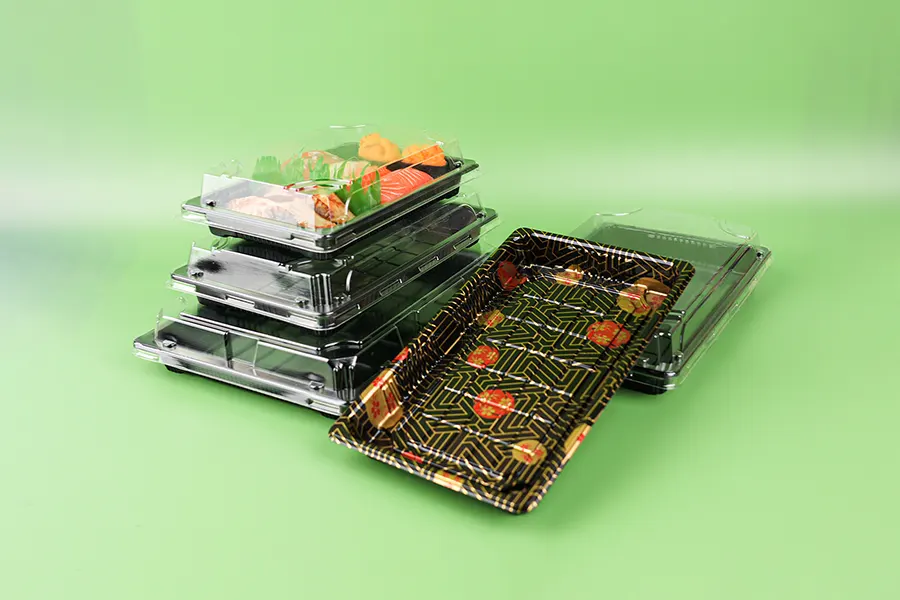
A supplier should first confirm the product family: hinged sushi box, separate-lid container, compartment tray, sauce-compatible tray, or a custom food tray. Each format solves a different handling problem. A hinged lid may reduce assembly labor, while a separate lid can support a broader size range and a different stacking pattern.
Ask for dimensional drawings, cavity measurements, lid engagement details, material information, and packing quantities. Do not approve a sample solely because it looks clear on a studio background. Fill it with the intended sushi pieces, add the sauce cup if applicable, close it repeatedly, and test the packed unit after refrigeration and delivery handling.
For supplier-selection context, our sushi container wholesale buying guide covers the checks we use when reviewing wholesale requirements. Buyers expanding into broader takeaway packaging can also compare our food container product range.
7 Proven Checks for a Sushi Container Supplier
1. Food-contact and factory documentation
Request the declaration of compliance and test documents for the intended market and food type. The document set should identify the material, product family, intended use, and any temperature or contact limitations. A generic resin statement is not a substitute for finished-packaging evidence.
At Yasitai, our certification portfolio includes BRC A+, ISO9001, ISO22000, SGS, BPI, DIN, and GRS. BRC A+ and ISO22000 are especially relevant to food-packaging supplier approval because they support a structured food-safety management discussion. Your own approval process should still verify the specific material and finished product documents.
2. Lid fit, leak resistance, and tamper control
The lid should close with consistent engagement across the full batch. Check corner closure, hinge fatigue if applicable, sauce separation, and the effect of condensation. For delivery, test the filled package in the orientation and handling sequence used by your drivers or courier partners.
A practical sample protocol is to close and reopen the lid repeatedly, stack filled containers at the planned height, and inspect for movement after a controlled transport simulation. Record the result by SKU rather than relying on a single demonstration sample.
3. Clarity, presentation, and display stability
Sushi packaging has a visual job: the customer should see portion quality without opening the pack. Compare clarity, surface marks, fogging, and the way the tray holds presentation after cold storage. A clear lid that scratches easily may create a poor retail impression even when its fit is acceptable.
Specify the display environment in the quotation. A grocery counter, dark delivery bag, refrigerated shelf, and restaurant takeaway order may need different geometry or venting decisions.
4. Material and thickness consistency
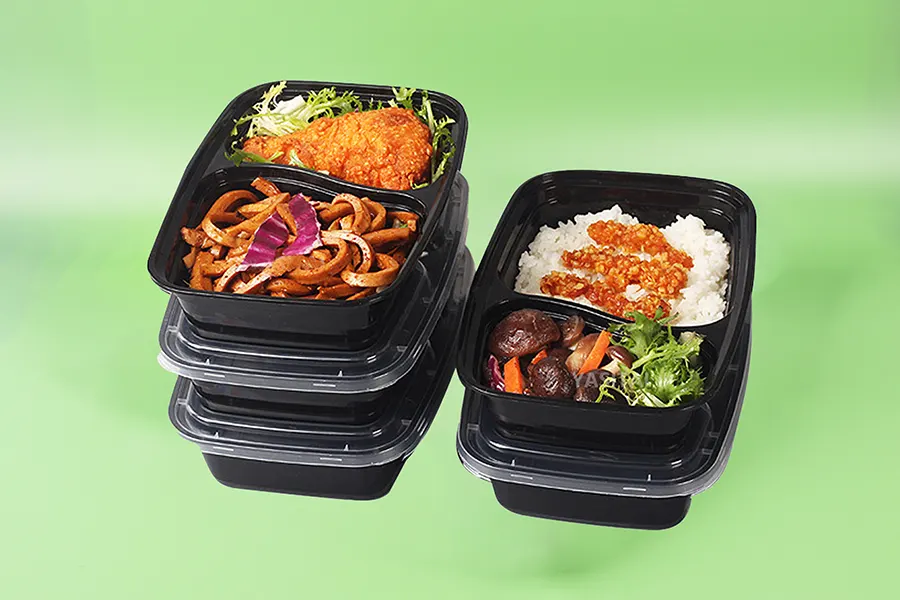
Ask which material is used for the container and lid, how thickness is controlled, and whether the material changes between samples and mass production. In our production practice, we link the approved sample to the mould, material specification, artwork, and batch records before scale-up.
Yasitai operates a 30,000 m² facility with more than 60 machines and monthly capacity of 300 million pieces. That scale is useful only when it is matched with process control. Your RFQ should request a dimensional tolerance sheet, weight range, material declaration, and a pre-shipment inspection sample.
5. Tooling and OEM/ODM flexibility
A standard mould can shorten the path to launch, while a custom mould can improve portion presentation, brand differentiation, or stacking efficiency. Ask who owns the tool, how revisions are approved, what the trial-shot process includes, and how the supplier protects the approved design.
We support OEM and ODM work for packaging buyers who need custom geometry, logo treatment, or a coordinated line across sushi boxes and food trays. The right supplier will explain where customization adds value and where it adds cost without improving the customer experience.
6. Capacity, lead-time, and replenishment planning
A quotation is not a supply plan. Ask for production capacity by product family, mould availability, minimum order quantity, packaging configuration, inspection timing, and replenishment lead time. Also confirm whether the supplier can maintain the same material and dimensions across repeat orders.
Yasitai’s automated production model and high monthly output support large recurring programs, but we still recommend a phased plan: approve the sample, validate the first production lot, set reorder triggers, and retain a reference sample for future inspections.
7. Traceability and pre-shipment control
Traceability is what lets you investigate a complaint without guessing. Your supplier should be able to connect the shipment to a production date, material batch, mould, inspection record, and packing list. Ask for a sample report before signing the purchase order.
When we work with foodservice buyers, we treat packaging control as part of the service rather than an afterthought. The goal is a repeatable container that protects presentation, supports food safety documentation, and reduces avoidable replacement or relabelling costs.
How Do Sushi Containers Compare with Food Trays?
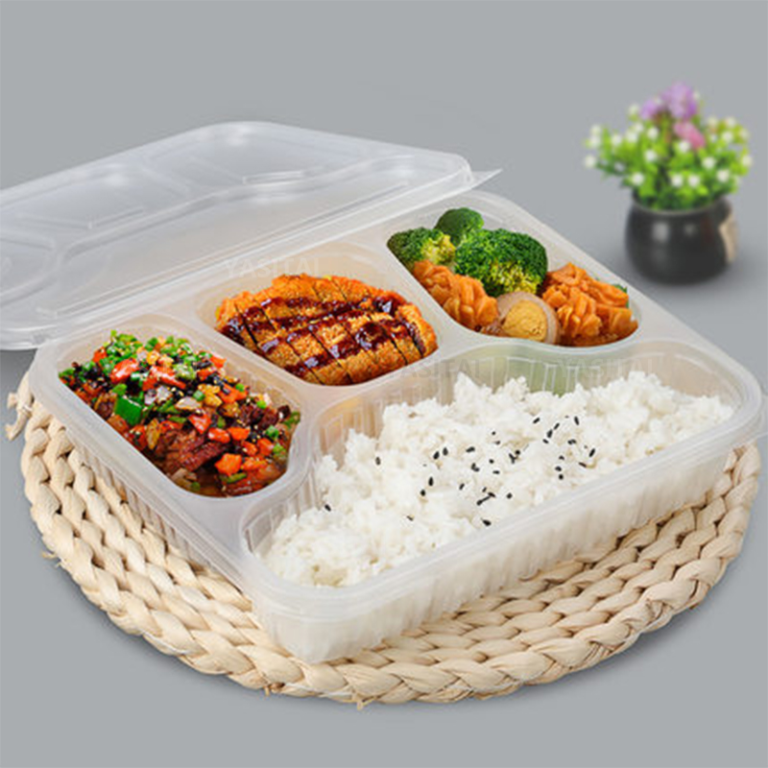
A sushi container usually prioritizes product visibility, compact presentation, and lid security. A food tray may prioritize compartments, sauce separation, portion flexibility, or compatibility with a larger takeaway system. The correct choice depends on the menu and delivery workflow.
| Buying factor | Sushi container | Food tray |
|---|---|---|
| Primary use | Rolls, nigiri, sashimi, compact assortments | Multi-item meals, compartments, prepared foods |
| Key fit test | Roll movement, lid closure, display clarity | Portion separation, stacking, sauce management |
| Main design lever | Cavity geometry and lid engagement | Compartment layout and tray footprint |
| Supplier evidence | Food-contact documents, dimensions, closure test | Same documents plus compartment and load test |
| Best sampling method | Filled sushi set through cold-chain handling | Filled meal set with sauces and stacking test |
A capable sushi container supplier should be able to discuss both formats without forcing one mould into every application. That conversation often reveals whether the supplier is a manufacturer or simply reselling a catalogue.
Supplier Audit Checklist: 5 Documents to Request Before Signing a Purchase Order
- Food-contact declaration and migration/test reports: Confirms suitability for your food type, market, and temperature range.
- Technical drawing and tolerance sheet: Verifies cavity dimensions, wall thickness, lid fit, and repeatability.
- Material and additive declaration: Identifies resin, colorants, inks, coatings, and recycled or compostable content claims.
- Pre-shipment inspection report sample: Shows how the supplier checks dimensions, appearance, closure, packing, and quantity.
- Traceability and corrective-action record: Demonstrates how the factory would investigate a batch issue and prevent recurrence.
For food-safety assurance context, buyers can review the BRCGS supply chain assurance programmes and use the requirements relevant to their own supplier-approval process. The external standard is a reference; the manufacturer’s product-specific records are what you should attach to the purchase file.
FAQ: Choosing a Sushi Container Supplier
Q: What is the first sample test for a sushi container?
Fill the container with the actual menu item, close it, chill it, stack it, and move it through a realistic delivery simulation. Yasitai recommends recording lid fit, product movement, condensation, clarity, and presentation by SKU so the decision is repeatable.
Q: Should we buy a hinged sushi box or a separate-lid container?
Choose based on assembly labor, size range, closure requirements, and stacking. Hinged formats can simplify packing, while separate lids may offer different geometry and product-line flexibility. Test both against your actual workflow before committing.
Q: Can a supplier use recycled or compostable materials for sushi packaging?
Potentially, but the claim and food-contact evidence must match the exact product and market. Ask for material-specific documentation, finished-product testing, and clear end-of-life or recycled-content wording before printing packaging claims.
Q: What MOQ and lead-time questions should we ask?
Ask for MOQ by SKU and artwork version, mould or tooling timing, sample-to-production timing, inspection timing, packing quantities, and repeat-order lead time. A serious supplier will connect these answers to capacity and replenishment planning.
Q: Why does factory scale matter when selecting a sushi container supplier?
Scale can support stable replenishment, but only when process controls keep dimensions and materials consistent. Yasitai combines a 30,000 m² facility, 60+ machines, and monthly capacity of 300 million pieces with OEM/ODM and food-safety certifications; buyers should still validate the exact SKU through samples and inspection records.
Request a Sushi Packaging Sample from Yasitai
Send us your sushi dimensions, tray layout, lid preference, material target, monthly volume, destination market, and artwork requirements. We will use the brief to recommend a sample path rather than sending an unsuitable catalogue item.
WhatsApp Yasitai: +86 188 1899 9024 — Sushi Packaging Inquiry